Beyond Hydration: The Expanding Role of Beverages in Energy, Focus and Stress Resilience
Consumers are asking more of the beverages they drink. They want sustained energy without the crash, sharper focus without the jitters, and moments of calm that fit naturally into demanding daily routines.
This demand is creating new whitespace for beverage brands — but only when a product delivers a benefit consumers understand, a taste they will return for and a formula that can be credibly positioned in the market.
Functional beverages are expanding the role of refreshment from simple hydration to support for energy, focus and stress resilience, creating new opportunities for brands that can deliver on both experience and efficacy.
The Functional Beverage Boom
The functional beverage category continues to create meaningful opportunities for companies evaluating market entry or expansion. Projected to hit a value of over $315 billion by 2033, growing at an 8.5% CAGR globally, the market reflects growing consumer interest in beverages that offer benefits beyond refreshment, from energy and focus to digestive wellness, relaxation and sleep support. That growth is reshaping how brands compete. In mature beverage categories, a clearly articulated functional benefit can help a product stand apart, support premium positioning and create a stronger reason for consumers to choose it again.
Wellness is now a lifestyle expectation that influences daily purchasing decisions. Mainstream retailers bundling wellness programs signal that health-focused behavior has reached mass acceptance. Mental well-being is emerging as a lifestyle choice, driving demand for beverages positioned around stress management, focus and emotional balance alongside physical performance.
Functional beverage consumers vary. Younger buyers prioritize beverages that improve sleep quality and sharpen focus, responding to the demands of competitive job markets and digital-first lifestyles. Older demographics seek immunity support and digestive health. Popular functional beverage types now span multiple categories, each tailored to specific consumer needs and consumption occasions. This allows for diverse product positioning within the premium price tiers.
Performance beverages can support premium pricing — when the product experience and benefit story justify the value. Tropical fruit blends are leading this transformation, as great taste remains essential. Familiar but differentiated flavors, such as the tropical fruit blends, can help make functional benefits more appealing and encourage repeat purchase.
Formulating for Focus
Mental performance is one of the fastest-growing segments within this category. Professionals managing demanding workdays and students navigating classes, study sessions, and late nights are actively looking for products that support focus, alertness, and sustained mental performance. When a beverage fits a clear daily use occasion, it can lay a strong foundation for repeat purchase and brand loyalty.
How Simple Hydration Impacts Cognition
Before introducing complex ingredients, brands should understand that hydration itself offers a powerful cognitive benefit and a compelling entry point for functional positioning. Dehydration negatively impacts brain function, causing reduced cognitive performance, mood changes and delayed reaction times.
You don't need special ingredients to make legitimate cognitive claims. Proper hydration messaging, combined with convenient packaging for workplace consumption, positions your product as a productivity tool rather than just a beverage. As with any functional positioning, however, specific claims must be appropriately substantiated.
What Ingredients in Beverages Promote Focus?
Nootropics, the ingredients that support cognitive function, have transitioned from niche supplements into mainstream beverage formulations. Brain-boosting nootropic beverages are among the top categories for performance and wellness, reflecting the growing demand for products positioned around focus and mental clarity.
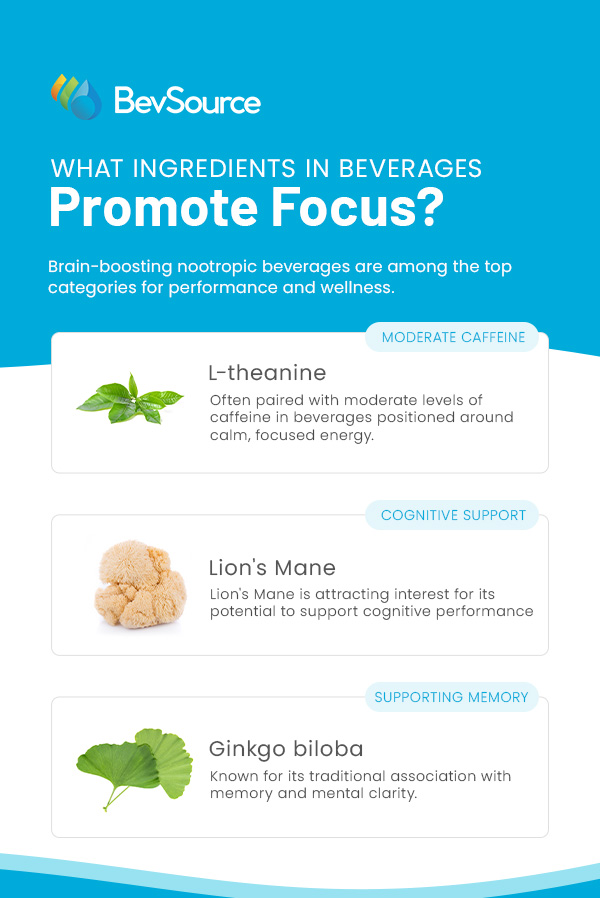
Functional beverage ingredients to help reduce brain fog and boost focus include:
- L-theanine: Naturally found in tea, l-theanine is often paired with moderate levels of caffeine in beverages positioned around calm, focused energy. This pairing gives brands an alternative to the jittery overstimulation associated with conventional energy drinks and creates a clear point of differentiation.
- Lion's Mane: Tapping into the growing consumer interest in mushrooms and nootropics, Lion's Mane is attracting interest for its potential to support cognitive performance, fueled by growing consumer awareness of nootropics and functional mushrooms. Its familiarity in the wellness community can help build consumer trust.
- Ginkgo biloba: Known for its traditional association with memory and mental clarity, ginkgo offers strong ingredient familiarity that can build consumer confidence at the point of purchase.
These beverages target specific use occasions, such as mid-afternoon focus slumps, pre-meeting preparation and study sessions, establishing clear marketing narratives and prompting habitual consumption patterns. When your product solves a specific daily problem, purchase frequency increases and brand loyalty strengthens.
Alternatives to Energy Beverages to Boost Productivity
Conventional energy beverages face growing concerns over high caffeine loads, sugar content and crash effects. This doubt opens a market gap for manufacturers offering sophisticated alternatives. Nootropic and adaptogenic beverages position as smarter energy solutions — sustained mental performance without the downsides that drive negative reviews and limit repeat purchases.
High-performance beverages are now everyday tools for focus, energy and resilience throughout the day, not just pre- or post-workout supplements. This shift expands your target market beyond athletes to knowledge workers, students, parents and anyone managing complex daily demands. The total addressable market grows significantly when you position beyond sports performance into lifestyle performance.
The opportunity lies in giving health-conscious consumers the focus and mental energy they want without the high-stimulation, crash-prone experience associated with conventional energy drinks.
Engineering Energy
Energy remains the largest functional beverage category, but buyer expectations have evolved. Today's modern energy beverages aim to deliver sustained energy without the sugar crashes and afternoon slumps associated with legacy products. They understand that consumers increasingly evaluate energy products through a wellness lens and reject ingredients that undermine long-term wellness, even if those ingredients provide short-term stimulation.
Sugar has become a liability in energy formulations. Consumers increasingly associate excess sugar with poor metabolic health and the spike-and-crash experience of conventional energy drinks. For brands, reducing sugar is no longer simply a nutritional improvement. It's an opportunity to develop products that better align with evolving expectations for sustained energy and everyday wellness.
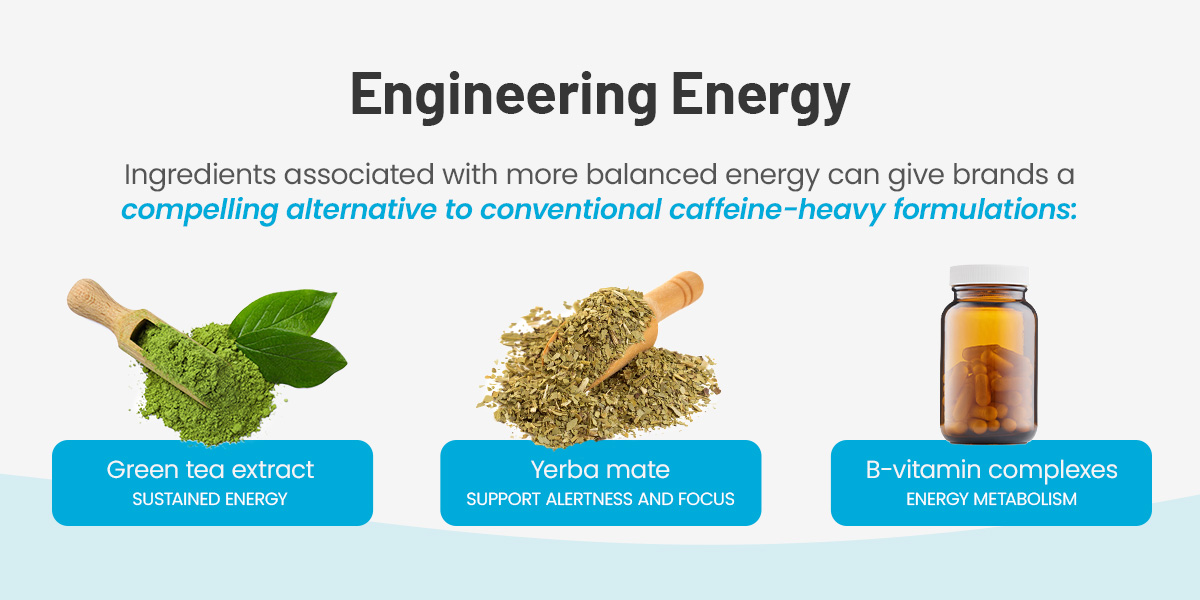
Ingredients associated with more balanced energy can give brands a compelling alternative to conventional caffeine-heavy formulations:
- Green tea extract provides naturally sourced caffeine and l-theanine, supporting a smooth, sustained energy, allowing manufacturers to position themselves as premium, wellness-oriented alternatives to caffeine alone.
- Yerba mate contains naturally occurring caffeine, antioxidants and amino acids that support alertness and focus.
- B-vitamin complexes play an essential role in energy metabolism at the cellular level, providing a familiar, science-grounded functional cue that resonates with label-conscious buyers.
Bioactive ingredients in functional beverages include vitamins, phenolic compounds, peptides, minerals, amino acids, and unsaturated fatty acids, delivering layered functionality that can help differentiate products and support higher price points than simple caffeine-and-sugar blends. Beverages containing caffeine from natural sources, B vitamins, and amino acids like taurine and L-carnitine are gaining traction, demonstrating that buyers actively seek natural ingredient compositions and energy drinks that deliver more than simple stimulation.
Brands entering or expanding within the energy category have a clear opportunity. Natural energy beverages rely on naturally sourced caffeine, plant-based sweeteners, and simple, recognizable ingredients, positioning them for the growing cleaner-label market. Active nutrition is evolving from sports-specific products into lifestyle beverages, expanding the market beyond athletes to everyday consumers managing work, family and personal demands. Brands positioned to capture this growth are those delivering natural ingredients that sustain performance without the tradeoffs consumers increasingly associate with conventional energy drinks.
Liquid Calm
While energy and focus dominate conversations, stress management and mood support represent an equally significant growth opportunity. Modern life brings constant pressure, and in response, individuals are increasingly adopting self-care habits that span emotional, mental and physical well-being.
Beverages designed to support stress resilience tap in to everyday needs across distinct occasions, including morning stress management, the evening wind-down or anytime anxiety relief. These occasions create opportunities for multiple SKUs and distinct marketing narratives within a single brand.
Tapping Into the Gut-Brain Connection
The gut-brain axis has moved from emerging science into mainstream awareness, establishing formulation opportunities that connect digestive health with mental wellness. Research into the gut-brain axis links microbiome health to cognitive function and mood, giving manufacturers a scientifically grounded story for positioning probiotics and prebiotics as mood-supporting ingredients, not just digestive health ingredients.
As research continues to connect probiotics with mood support, brands using clinically studied strains at effective levels have a stronger foundation for substantiated claims. This opens the door to beverages positioned at the intersection of digestive and emotional wellness, allowing one thoughtfully formulated product to address two increasingly connected consumer priorities.
Best Beverage Ingredients for Stress Support
Adaptogens have transitioned from unfamiliar botanicals into recognized functional ingredients, and buyer willingness to pay for adaptogen-enhanced beverages continues growing. Ashwagandha, rhodiola rosea and holy basil each offer distinct benefits, giving brands multiple ways to differentiate within the growing market for stress-support beverages.
Ashwagandha is associated with supporting healthy cortisol levels and the body's response to stress, making it relevant for beverages positioned around composure and performance during demanding periods. Rhodiola rosea helps the body adapt to stress while addressing fatigue and supporting physical endurance. Holy basil brings an established history of traditional use and an adaptogenic story that resonates with consumers seeking natural, holistic approaches to stress management.
CBD beverages may also reduce anxiety, offering brands a contemporary approach that attracts wellness-forward buyers willing to pay for innovative stress solutions. CBD continues to attract consumer interest as a relaxation ingredient, but beverage brands face a complex and evolving regulatory environment. Adaptogenic and CBD beverages can support more premium positioning than conventional beverages, helping brands differentiate within a growing market for calm, mood, and stress-support beverages.
Developing Beverages to Improve Sleep Quality
Sleep support represents a significant market opportunity. Poor sleep affects productivity, wellness and quality of life, generating interest in convenient solutions that fit naturally into an evening routine. Ingredients associated with calming effects and healthy sleep include melatonin-containing tart cherry, tryptophan, magnesium, chamomile, and valerian root, giving brands multiple formulation pathways for sleep-focused beverages.
Magnesium helps promote relaxation and sleep quality. It offers strong consumer recognition and a familiar connection to relaxation and sleep support. Chamomile and valerian root offer established botanical cues with familiarity that make the product's intended use immediately understandable.
Sleep beverages also target evening consumption occasions currently dominated by alcohol. By offering calm and relaxation support in a convenient format, brands can create a clear use case with the potential to become part of a recurring nightly ritual. That distinct occasion can support product differentiation, repeat purchase, and premium positioning.
A Modern Antidote
The always-on digital world has generated a new category of wellness concerns, and with them a new market opening for performance beverages. Functional beverages that support next-generation needs, giving brands an opportunity to establish distinctive positioning at the forefront of emerging wellness trends.
While energy, focus and stress categories already face established competition, beverages specifically formulated to counteract digital overload occupy relatively uncontested market space. Brands entering now can begin building an association with digital wellness before the space becomes more crowded.
The role of nutrition in mitigating digital eye strain has become increasingly evident, giving brands scientific credibility for blends targeting digital strain. Translating nutritional science into clearly communicated consumer-facing benefits establishes differentiation in this emerging category.
Ingredients that mitigate digital strain include:
- Omega-3 fatty acids support cognitive function and may reduce inflammation associated with prolonged screen time.
- Lutein and zeaxanthin accumulate in eye tissue and may protect against blue light damage from digital devices. Brands can make specific "blue light protection" claims on packaging, tapping directly into consumer concerns about screen time and creating a strong, defensible point of differentiation in a crowded market.
- Vitamins A, C and E provide antioxidant support against oxidative stress from extended digital engagement.
- Zinc supports immune function and cellular health during periods of high mental demand.
- Anthocyanins offer antioxidant and anti-inflammatory properties that may counteract the negative effects of constant connectivity.
Formulating for digital strain establishes specific positioning paths: beverages for remote workers, gamers or students. Each represents a distinct target market with unique distribution channels and marketing narratives.
Partnering with a service provider who can help source the best ingredients accelerates time to market, allowing brands to establish category presence before digital wellness becomes oversaturated. Market leaders in emerging categories are those moving decisively while the window remains open.
Partner With BevSource: From Concept to Commercialization
The functional beverage market offers substantial opportunity with continued growth, premium positioning, recurring use occasions and sustained growth projections that outpace conventional beverage categories. Capturing this opportunity requires navigating complex formulation challenges, sourcing high-quality functional ingredients, balancing efficacy with taste, ensuring regulatory compliance, and scaling production without compromising product integrity.
BevSource helps brands manage that complexity. As your innovation and production partner, we bring the technical expertise, ingredient sourcing relationships and production network needed to transform your functional beverage concept into a market-ready product.
Whether you're launching your first functional beverage or expanding an existing portfolio, BevSource accelerates your path to market while reducing the risks that derail manufacturers without experienced development partners.
Contact a specialist at BevSource to turn your vision into a market-ready reality.