Mood and Cognitive Beverages: Formulating Functional Beverages for Stress, Mood and Mental Clarity

The beverage industry is evolving beyond broad wellness claims toward targeted functional benefits that support relaxation, mood, cognitive performance, and mental clarity. As consumers increasingly seek beverages tailored to specific needs and consumption occasions, brands have an opportunity to create products that deliver meaningful functional benefits alongside a great drinking experience.
However, success requires more than adding a functional ingredient to a formula. Many of the ingredients associated with mood and cognitive support present formulation challenges, from bitterness and earthy flavors to solubility, stability, processing, and regulatory considerations. The brands that win are the ones that solve for all of it, developing beverages that deliver meaningful functionality, great taste, and a consumer experience that inspires repeat purchases.
The Rise of the “Mood Economy” in Beverages
Mood beverages represent a distinct category within the broader functional beverage landscape. These products are often formulated with ingredients intended to support calm, focus, or relaxation, aligning with consumer interest in mood and cognitive-enhancing benefits. The market for relaxation beverages is projected to grow at a compound annual growth rate of 15.30%, reflecting consumer willingness to invest in functional solutions for mental wellness.
This growth is fueled by Gen Z and “sober curious” consumers seeking anxiety relief beverages and social facilitators without the hangover.
These beverages function like supplements, delivering cognitive wellness benefits and positioning themselves as tools that aid mental performance and stress management. Businesses can capture multiple usage occasions and consumer needs within a single product brand.
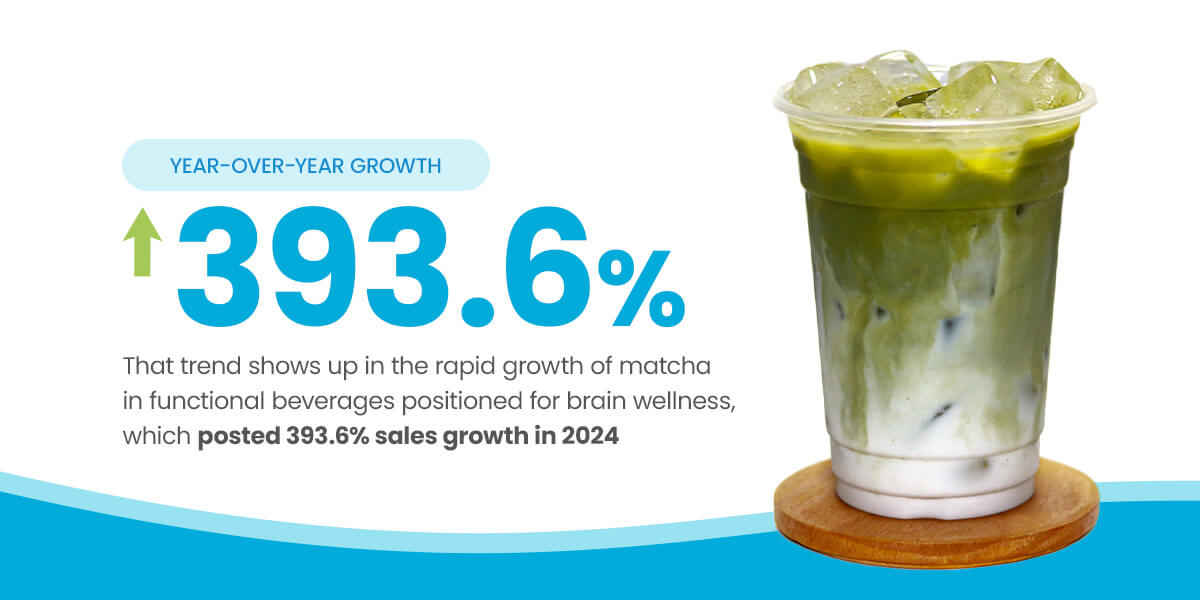
There's also a shift away from relying on high-stimulant caffeine as the default cognitive enhancer. Consumers are increasingly drawn to plant-based ingredients associated with calmer, more sustained focus. That trend shows up in the rapid growth of matcha in functional beverages positioned for brain wellness, which posted 393.6% sales growth in 2024 versus the prior year — a small but fast-growing niche that reflects interest in ingredients that pair caffeine with L-theanine for a smoother cognitive experience.
For brands positioning products around mental clarity, this shift is significant. Formulations that support focus, alertness, and concentration without relying on aggressive stimulant positioning represent a chance to differentiate in a crowded energy beverage category. This approach appeals to health-conscious consumers who are rethinking conventional energy beverages but still want solutions for mental performance.
Core Functional Ingredients
Choosing ingredients with credible evidence and using them at effective levels is essential to building mood support beverages that consumers trust. Understanding how these ingredients function, how they work together, and the formulation challenges they introduce can help brands develop products that deliver meaningful benefits while standing out in a competitive market.
Adaptogens for Stress Resilience
Adaptogens are botanicals traditionally used to help the body adapt to stress and support the hypothalamic-pituitary-adrenal axis. They're often associated with the body's stress-response system, including the hypothalamic-pituitary-adrenal axis — the network that helps regulate how we respond to stress. For brands targeting stress relief beverage formulation, these botanicals offer scientifically backed benefits that resonate with wellness-conscious consumers. Consider these leading adaptogens:
- Ashwagandha is often highlighted for its role in stress support, with human trials of standardized extracts such as KSM-66 showing reductions in perceived stress and cortisol levels. In addition, it's commonly associated with the nervous system.
- Rhodiola rosea is often used for dual benefits: helping reduce feelings of fatigue while promoting a sense of calm. It's a natural fit for beverages designed to help consumers stay focused through long workdays, study sessions, or other periods of sustained mental effort.
- Holy basil (Tulsi) is traditionally used to support stress resilience and overall well-being in Ayurvedic medicine, and translates well into modern ready-to-drink applications. Its mild, herbaceous flavor profile, with subtle sweet and spice notes, makes it easier to incorporate into formulations targeting emotional equilibrium and everyday stress management.
The New Nootropics
Nootropics anchor the cognitive performance category, appealing to consumers seeking mental clarity and focus. Mushroom nootropics are gaining significant traction in beverages for their brain-wellness benefits:
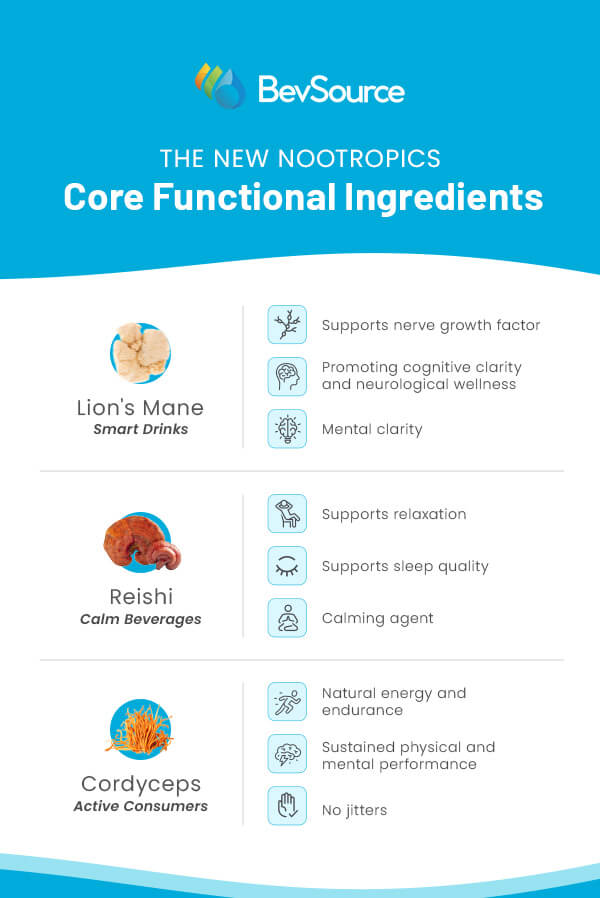
- Lion's Mane supports nerve growth factor, promoting cognitive clarity and neurological wellness. Gen Z often chooses lion's mane for sustained focus without the crash — part of the broader mental clarity movement away from stimulant-based cognitive enhancement. For brands, this ingredient positions products as “smart drinks” that enhance mental performance naturally, a key differentiator in a market saturated with caffeine-heavy energy beverages.
- Reishi supports relaxation and sleep quality. Brands formulating evening “calm” beverages often use Reishi as a calming agent, especially for “wind down” occasions within evening routines.
- Cordyceps is commonly incorporated into beverages positioned around natural energy and endurance. It appeals to consumers seeking sustained physical and mental performance without the jitters often associated with high-caffeine beverages.
Beyond mushrooms, ginkgo biloba remains one of the best-selling brain health ingredients across the broader supplement category, with $60,499,751 in sales according to Nutrition Business Journal. It remains the category's top-performing functional ingredient, demonstrating proven consumer acceptance and commercial scale for cognitive-wellness beverages.
Amino Acids and Nootropics
Beyond botanicals and mushrooms, amino acids are commonly used alongside adaptogens and nootropics to develop beverages positioned around calm, focus and cognitive performance. Together, these ingredients allow brands to build more targeted functional formulations:
- L-Theanine is best known for its synergy with caffeine: the “smart stack” that reduces jitters while promoting alpha brain waves associated with calm focus. This pairing delivers the mental clarity benefits of caffeine — alertness, concentration, cognitive speed — while mitigating caffeine-associated anxiety and crash, which drives consumers away from conventional energy beverages.
- GABA and L-Tyrosine are often combined to balance calm with alertness. GABA supports the primary inhibitory neurotransmitter system, promoting relaxation, while L-tyrosine serves as a precursor to dopamine and norepinephrine for mental alertness. L-tyrosine generally shows better absorption but requires sufficient dosing for noticeable effects, which is a formulation challenge in ready-to-drink formats.
Supporting Botanicals
In addition to adaptogens and nootropics, familiar botanicals can play an important role in mood support beverages. Their long history of use, consumer recognition, and approachable flavor profiles make them valuable ingredients on their own or as part of a broader functional blend. For brands, these botanicals offer three distinct commercial advantages:
- Consumer familiarity: Well-recognized ingredients such as chamomile and lemon balm make functional beverages feel more approachable.
- Formulation flexibility: They pair well with adaptogens and nootropics to create more balanced ingredient systems and flavor profiles.
- Sensory benefits: Their herbal and floral characteristics can help round out formulas and soften the earthy notes associated with some functional ingredients.
The nervines — lemon balm, passionflower and chamomile — have long-established reputations for promoting calm and supporting sleep. While they may not deliver the dramatic cortisol-modulating effects of ashwagandha or the cognitive enhancement of Lion's Mane, their mild profiles make them ideal for adaptogenic formulations targeting women's wellness, where brands often layer multiple functional ingredients for synergistic benefits. These botanicals also improve the sensory experience by softening some of the bitter or earthy notes from stronger actives.
From a formulation strategy perspective, supporting botanicals allows brands to develop more balanced sensory profiles while reinforcing product positioning. When thoughtfully combined with adaptogens or nootropics, they contribute to a more compelling consumer story without relying on a single hero ingredient.
Stacking, Taste and Stability
Successful mood support beverages rarely rely on a single functional ingredient. Instead, formulators often “stack” ingredients to create beverages tailored to specific mood states, wellness goals, or consumption occasions.
Whether the goal is calm focus during the workday, relaxation after work, better sleep, or alcohol-free social occasions, combining ingredients allows brands to develop more targeted functional products than any single ingredient could achieve alone. The challenge is that every additional functional ingredient increases formulation complexity, introducing new considerations around flavor, solubility, stability, ingredient interactions, and processing:
- Masking bitter and earthy profiles: Ashwagandha and valerian root present earthy, bitter profiles that consumers find off-putting in beverages. Brands can layer strong citrus or berry flavor systems, incorporate bitterness blockers, or use microencapsulation to isolate active compounds from taste receptors.
- Solubility and texture: Mushroom powders can create sedimentation issues that affect both appearance and mouthfeel — two critical factors in consumer acceptance. Extracts offer better solubility but come at higher costs. Brands must balance functionality, visual appeal and cost when selecting ingredient forms.
- Stability and shelf life: Stability extends beyond preventing sedimentation. Functional ingredients must maintain their potency, appearance, and flavor throughout processing and shelf life. Heat, pH, oxygen exposure, and interactions between ingredients can all affect product quality, making stability testing an essential step in beverage development.
- Sugar reduction: High sugar intake can contribute to cortisol elevation, potentially contradicting a product's stress-management positioning. The result is a formulation paradox: sweetness is required to mask bitter actives, but excess sugar undermines the mood-management claim. Natural sweeteners, sugar alcohols and emerging sweetening technologies offer solutions, but each comes with sensory trade-offs, cost implications and label considerations that require careful evaluation.
Defining the “Mood” With Product Positioning
Consumers increasingly choose functional beverages based on the outcome they want to achieve and the moment they're in. Starting with the desired mood state or consumption occasion helps brands make smarter decisions about formulation, flavor, ingredient selection and product positioning. While the possibilities continue to expand, several mood support occasions have emerged as particularly strong opportunities for beverage brands:
- Calm energy: Focus and concentration beverages designed for the workday address Zoom fatigue, study sessions and sustained mental performance. Formulations typically stack L-theanine with moderate caffeine or pair lion's mane with rhodiola for cognitive clarity without overstimulation. This positioning captures the morning and midday occasions traditionally dominated by coffee and energy beverages, offering mental clarity as the core benefit rather than raw stimulation.
- Afternoon reset: As energy and focus naturally decline later in the day, many consumers look for a mental reset without reaching for another high-caffeine beverage. Products positioned around the afternoon reset may combine modest amounts of caffeine or caffeine-free functional ingredients, such as L-theanine, rhodiola or Lion's Mane, to support sustained focus and balanced energy through the remainder of the workday.
- Unwind or decompress: Stress relief beverages aimed at the 5 p.m. transition offer a functional replacement for the traditional glass of wine. Ashwagandha, reishi, lemon balm and magnesium formulations signal the shift from work to rest. Calming bedtime beverages in this category extend usage into the evening wind-down ritual, capturing occasions where consumers actively seek relaxation solutions.
- Social connection: Euphoric blends designed for social gatherings follow the Kin Euphorics model, creating sociability and mood elevation without alcohol. Kin Euphorics, like Recess, demonstrates the commercial potential of targeting a specific occasion, validating the social setting as a distinct market opportunity. These products often incorporate adaptogens, nootropics and botanicals that support dopamine and serotonin pathways, positioning functional beverages as legitimate alternatives in settings where alcohol traditionally dominated.
Each positioning strategy requires different ingredient stacks, flavor profiles and marketing messages. Still, all four represent substantial revenue opportunities for brands willing to develop occasion-specific product lines.
The Regulatory Landscape
Navigating claims is where many brands stumble, risking regulatory scrutiny or eroding consumer trust. For beverages positioned around mood support, relaxation or mental clarity, success depends not only on choosing the right ingredients but also on making claims that are accurate, substantiated and compliant.
Structure/function, such as “supports a sense of calm” or “promotes focus and mental clarity,” may be appropriate for conventional beverages when they're truthful, not misleading and supported by appropriate evidence. Claims that imply the diagnosis, treatment, prevention or cure of a disease, such as "treats anxiety" or "cures depression," aren't permitted for conventional foods and beverages and can significantly increase regulatory risk.
Maintaining appropriate substantiation is equally important. Brands should work with ingredient suppliers to obtain supporting documentation and scientific evidence for any structure/function claims they intend to make. A knowledgeable formulation partner can help ensure ingredient selection, formulation, labeling and product positioning align with regulatory requirements from the beginning, reducing development delays and minimizing the need for costly reformulation.
The right formulation partner can help brands navigate these complex rules by advising on formulation choices and supporting regulatory-aware development from day one.
Formulators should also verify that functional ingredients, particularly novel nootropics and other emerging ingredients, are appropriate for use in conventional foods and beverages. Ingredients with well-established risk profiles and regulatory histories help reduce risk and support a smoother path to commercialization.
Partner With BevSource to Develop Mood and Cognitive Beverages
Bringing a mood or cognitive beverage to market successfully requires formulation expertise, regulatory knowledge, manufacturing relationships and scalable production capabilities. Many brands underestimate the complexity of translating a wellness concept into a stable, great-tasting product that meets all regulatory requirements while delivering genuine functional benefits.
BevSource specializes in developing functional beverages that solve real consumer needs. We understand the science behind functional ingredients and how to formulate them for maximum efficacy and minimum taste impact. Our team navigates regulatory requirements from the start, helping you position your product compliantly while telling a compelling brand story.
We connect you with manufacturing partners who can handle botanical ingredients and maintain the quality standards your functional claims require. Whether you're developing your first product or expanding an existing brand, we provide beverage development solutions that turn wellness concepts into successful products.
Partner with us to discuss your mood or cognitive beverage project. Contact us today to get started.