The Sweet Spot: Innovating With Natural Sweeteners and Fiber to Reduce Sugar in Beverages
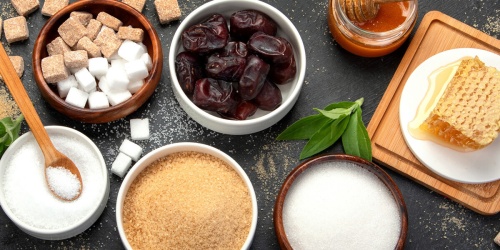
Today's consumers want lower-sugar beverages made with familiar ingredients, expecting the same sweetness and satisfaction with fewer calories or lower sugar. Effective sugar reduction primarily aims to lower calorie content and glycemic response and reduce the amount of “added sugars” on nutrition labels. Even natural sweeteners like honey, agave or juice concentrates contribute calories and sugar. For genuine sugar reduction, the focus shifts to low-calorie ingredients that maintain taste and texture.
Successful reduced-sugar beverages use a layered approach, combining noncaloric or low-calorie natural sweeteners like stevia, monk fruit, and allulose — paired with functional ingredients such as prebiotic fibers to restore body and mouthfeel — replace sugar's sweetness and functionality, effectively reducing calorie content and added sugars.
The brands that reduce sugar without compromising on experience can command consumer loyalty and accelerate retail success. A well-designed sweetener system is no longer a defensive move — it's a competitive advantage that supports premium positioning and “no added sugar” claims. Understanding the key strategies and ingredients is the first step in turning this market trend into a co-packer-ready reality.
Why Reducing Sugar in Beverages Is Hard
Sugar does more inside a beverage than most consumers realize. Beyond sweetness, it contributes body, improves texture and mouthfeel, masks unwanted flavors, and creates a more rounded drinking experience.
Removing sugar creates challenges for beverages in various categories:
- An energy drink made with caffeine and botanicals may come across as more bitter.
- A hydration beverage may feel thinner.
- A ready-to-drink (RTD) protein beverage may feel thinner and less creamy.
- An alcoholic RTD may reveal more heat and bitterness from the alcohol.
Formulators are constantly trying to emulate sugar's profile from sweetness onset and linger, to intensity and duration. Many natural alternatives fail to replicate the perception curve of sucrose — for example, they may peak higher or at different times, be more intense or linger longer. Others may have an artificial flavor or unpleasant aftertaste.
| Ingredient | What it does well | Where it struggles |
| Stevia | Delivers strong sweetness at low dosage levels | Potential bitterness or lingering aftertaste |
| Monk fruit | Rounds out fruit flavors and softens bitterness | Heavy linger and tongue coating |
| Allulose | Closest to sugar in taste and functionality | Higher cost and can cause digestive distress |
| Erythritol | Adds bulk and sweetness balance | Lacks sweetness intensity and balance; can also cause digestive distress with high consumption rates |
For this reason, successful reduced-sugar beverages often rely on expertly crafted sweetener blends. Blending sweeteners improves flavor, can reduce gastrointestinal side effects and can achieve “sweetness synergy,” allowing for lower total sweetener usage.
Beyond the technical challenges, it's important to distinguish effective sugar reduction from simply swapping one caloric sugar for another. “Natural” alternatives like honey, agave, fruit juice concentrates or coconut sugar still contribute to total sugar and calorie counts.
Natural Sweeteners for Functional Beverages
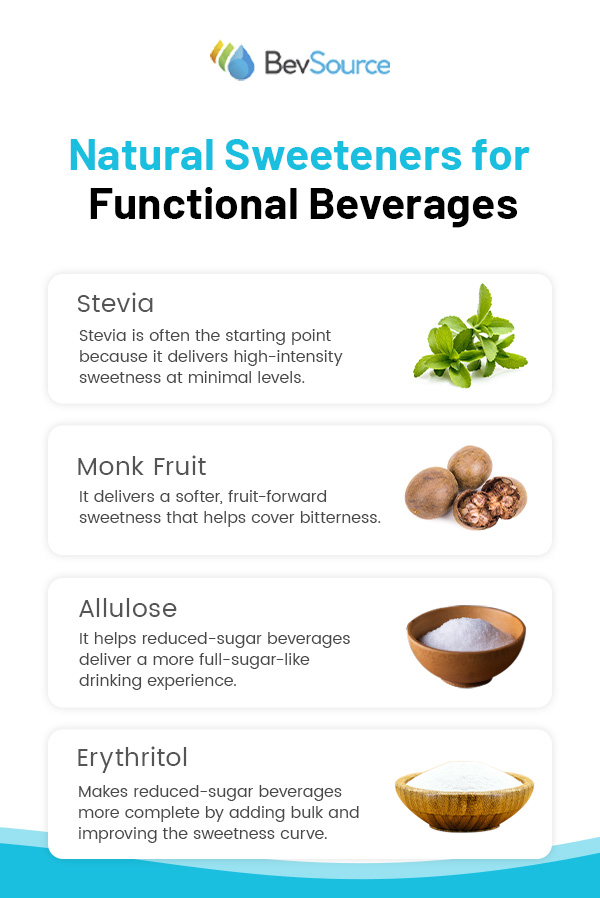
Each sweetener offers a distinct advantage. Rather than searching for a single “best” option, successful formulation comes down to selecting the sweetener that supports your product's specific performance and positioning goals.
- Stevia
Stevia is often the starting point because it delivers high-intensity sweetness at minimal levels. Many beverage brands are turning to next-generation steviol glycosides such as Reb D or Reb M, which offer a cleaner, more sugar-like taste than earlier forms of stevia. This ingredient is especially useful for brands targeting:
- A “no-added sugar” claim.
- A familiar ingredient with broad familiarity.
- Cleaner-label, plant-based positioning.
- Sweetness that performs well in acidic, shelf-stable beverages.
Stevia works best when blended with other ingredients to enhance mouthfeel and round out the finish.
- Monk Fruit
Monk fruit has strong consumer appeal due to its natural origins and clean sweetness profile, but is often blended with sugar alcohols or other natural sweeteners such as stevia to balance its intense sweetness and provide bulk. It delivers a softer, fruit-forward sweetness that helps cover bitterness from caffeine, adaptogens and botanicals. Brands often choose this ingredient for:
- Flavor masking in beverages with strong functional ingredients.
- Products making low-calorie, low-carb claims.
- Formulations targeting consumers who need to manage blood sugar or avoid glycemic impact.
This ingredient is most effective in energy beverages, tea-based RTDs and functional waters with caffeine or vitamins.
- Allulose
Allulose solves a different challenge. Closest to sugar in taste and functionality, it helps reduced-sugar beverages deliver a more full-sugar-like drinking experience. This ingredient contributes bulk, mouthfeel and mild sweetness, with a more rounded texture and softened harsh or bitter notes than many other natural sweeteners. Brands choose allulose for:
- Added body and mouthfeel in a soda, juice or RTD beverage.
- A more sugar-like sensory experience while reducing added sugars.
- A labeling advantage: Allulose is excluded from “total sugars” and “added sugars” on Nutrition Facts and Supplement Facts panels under current FDA guidance.
A prebiotic soda may use allulose to create the same richness and drinkability consumers expect from conventional full-sugar sodas while supporting a “no added sugar” claim. It's also ideal for protein shakes and meal replacement beverages, as it provides sweetness without spiking blood sugar levels or impacting metabolism.
- Erythritol
Erythritol is a supporting ingredient, helping make reduced-sugar beverages more complete by adding bulk and improving the sweetness curve. This ingredient:
- Works well in synergy with high-intensity sweeteners with a clean, sugar-like taste.
- Improves sweetness dynamics, with faster onset and reduced linger.
- Provides bulk, texture and mouthfeel in reduced sugar formulations.
A lemon-lime sparkling water may use erythritol to create a cleaner, more sugar-like sweetness profile with less lingering aftertaste. Erythritol works well with citrus, mint and berry flavors.
Fiber-Based Ingredients for Sugar Reduction in Beverages
Removing sugar from a beverage can significantly reduce body, mouthfeel and texture. Incorporating fiber helps restore this lost texture while also supporting potential digestive health positioning and enhancing the product's nutritional profile for more compelling on-pack and marketing claims.
Inulin and Inulin-Type Fructans (FOS)
Inulin and FOS are a good fit for brands looking to connect sugar reduction to gut wellness. These ingredients deliver a slight sweetness with a fuller texture. They support prebiotic positions, which can strengthen the product story and help your brand stand out in a crowded category. This combination works especially well in:
- Prebiotic sodas
- Wellness beverages
- Women's health beverages
- Daily nutrition products
These fibers work best in beverages with moderate acidity. In highly acidic beverages, their performance may decline over shelf life due to acid hydrolysis, which can break inulin down into smaller sugars and reduce prebiotic effectiveness.
Polydextrose and Soluble Corn Fibers
Polydextrose and soluble corn fiber are practical choices when the goal is to scale, achieve formulation stability and reliable processing. These ingredients create body without adding too much sweetness. They also perform well across a wide range of pH levels and production conditions, delivering:
- A fiber source that is easy to process.
- Consistent supply for large-scale production.
- Better mouthfeel in hydration or meal replacement beverages.
In hydration, protein and functional energy beverages, this combination helps manage osmolality, adding value to sports and electrolyte beverages.
Acacia Fiber and Other Prebiotic Candidates
Acacia fiber works best when a beverage needs to stay clear, light and easy to drink. It dissolves easily, adds very little viscosity and doesn't alter the beverage's appearance much. These aspects make it especially useful in categories where consumers expect a lighter profile:
- Sparkling waters
- Lightly flavored waters
- Botanical beverages
- Clear functional beverages
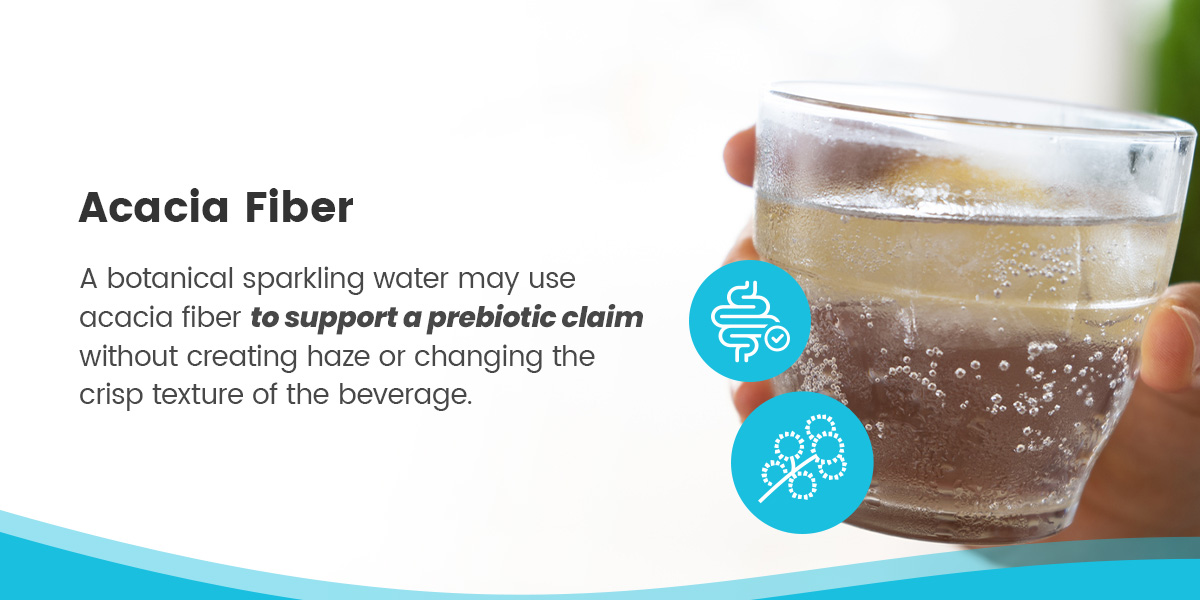
A botanical sparkling water may use acacia fiber to support a prebiotic claim without creating haze or changing the crisp texture of the beverage. Other emerging fiber options, including resistant dextrins and specialty soluble fibers, can give beverages more flexibility in pairing reduced sugar with a wellness message. The key to choosing a fiber is to consider what option matches your category. While a prebiotic soda may benefit from a richer texture, a sparkling water usually needs something lighter.
Emerging Enzymatic and Fermentation Approaches to Sweetness
New ingredient technologies are giving beverage brands more ways to reduce sugar without compromising taste or supply reliability.
Fermented Steviol Glycosides and Enzymatic Glycosylation
Reb M is a valuable sweetener in beverage development. Through fermentation, ingredient suppliers can produce Reb D and Reb M, reducing the need to extract their properties from the stevia leaf. This capability creates several advantages for beverage brands:
- More reliable supply
- Greater consistency between product runs
- Better availability for national launches
- Cleaner taste with less bitterness
These advantages translate to a more reliable ingredient system, essential for sustained retail growth. A beverage that succeeds in a pilot run needs to maintain its quality and consistency as order volumes increase.
Enzymatic glycosylation takes the process one step further. It modifies stevia molecules to create a smoother sweetness profile with fewer bitter notes, reducing the need for extra masking ingredients. While these advanced methods can simplify formulas, brands must navigate considerations around ingredient branding — without using specific trademarked ingredient names, differentiation on packaging, such as “Reb M,” can be challenging.
Sweet Proteins via Precision Fermentation
Sweet proteins are another emerging area to watch, offering a distinct approach to sweetness. Among them, brazzein stands out as a promising sweet protein alternative. Originally identified in the Oubli fruit, brazzein is 1,500 times sweeter than sugar and is now developed through precision fermentation. This production method allows suppliers to produce sweet proteins more consistently and at a larger scale.
Brazzein delivers a clean, sugar-like taste profile without the bitter, metallic or licorice-like aftertaste common with many other sweeteners. From a consumer perspective, it's fully digested as protein, has no currently known negative impact on the gut, is suitable for people managing diabetes or weight, and is virtually noncaloric due to the minimal quantities needed.
Brazzein, while a protein, contributes no added protein value due to its very low usage rate. It has a delayed onset and longer sweetness duration than ideal when used alone, making it good for a blend component rather than a stand-alone sugar replacement. If you want to flatten bitterness, extend sweetness or build a blended profile, brazzein can be useful, especially in combination systems.
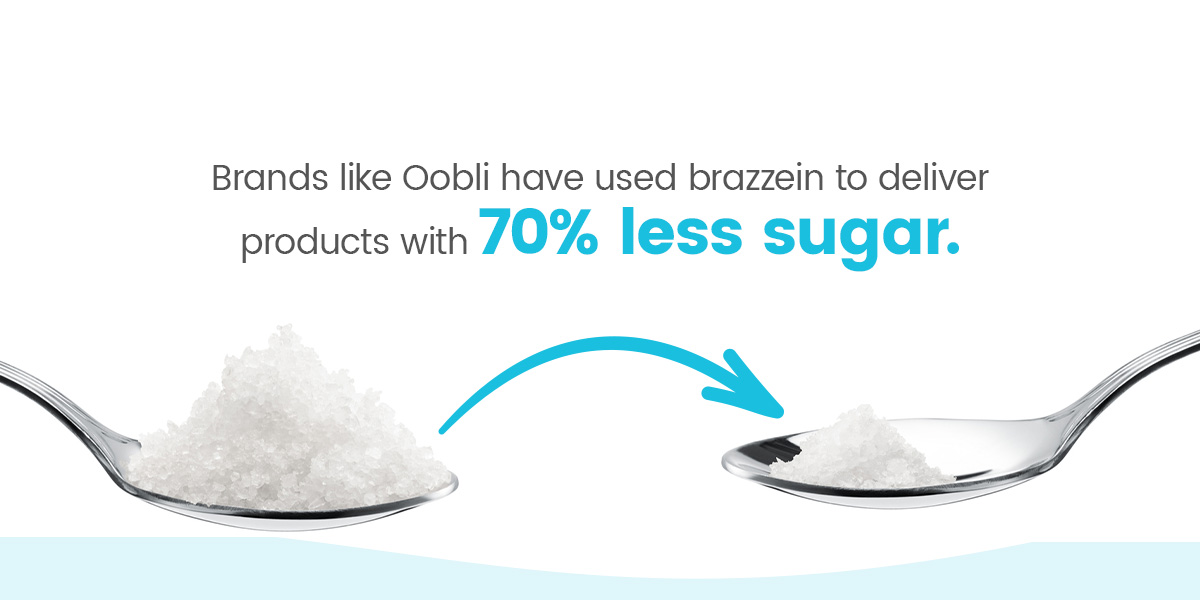
Its production via precision fermentation supports scalability and sustainability. Brands like Oobli have used brazzein to deliver products with 70% less sugar.
Sweet proteins are especially valuable because they could eventually reduce the number of ingredients in a reduced-sugar system. This possibility makes sweet proteins an excellent option for:
- Premium sparkling waters.
- Botanical beverages.
- Next-generation functional beverages.
As costs come down and supply expands, advanced sweet proteins are poised to become a noteworthy option for beverage brands seeking a cleaner sensory profile and simpler label.
Reducing Sugar Without Sacrificing Experience
Reduced-sugar beverage development becomes much easier when brands start with the product goal rather than the ingredient.
- Taste-first: Identify the beverage's biggest flavor challenge. If it needs a clean finish, start with Reb M. To address bitterness, add monk fruit. If the flavor profile is citrus or berry, a small amount of erythritol can improve sweetness timing.
- Function-first: The formula must still deliver the same sensory experience consumers expect. Allulose addresses thinness, a soluble corn fiber adds body and acacia fiber can improve clarity.
- Panel-first: Claims should shape the formulation from the beginning. Use allulose if you want a “no added sugar” claim. Add inulin or soluble fiber to support the FDA's “dietary fiber” definition and review the Nutrition Facts Panel before finalizing the formula. Note that some brands use fruit juices to add natural sweetness and achieve a “no added sugars” claim, though this approach will still contribute to the beverage's calorie content.
- Cost and supply-first: A strong formula must work at a commercial scale. Confirm minimum order quantities early, choose ingredients with reliable supply and consider whether the formula will still be practical at national retail volumes.
- Sugar blends: The most successful beverages use multiple ingredients. Choose an effective starting point, like allulose for the body or a small amount of fiber for texture. Then, the system can be adjusted based on the category and flavor profile.
How to Customize Sweetener Systems to Major Beverage Categories
The commercial beverage sweetening system that works in a sparkling water may fall short in an energy or hydration beverage. Each category has its own flavor challenges, texture expectations and claim opportunities.
Category-specific playbooks can help brands better understand the right combination of sweetening systems to support “no added sugar” claims.
Functional Beverages and Energy
Natural functional and energy beverages often contain caffeine, vitamins, adaptogens and botanicals that create bitterness or earthy notes. Reb M usually works well as the primary sweetener because it delivers a clean finish, while monk fruit softens sharper notes from caffeine.
Many brands add a small amount of soluble corn fiber or polydextrose to improve mouthfeel, helping the beverage feel more substantial without creating a heavy texture consumers don't expect from an energy beverage. This combination supports a “no added sugar” claim while making the beverage taste more polished and complete.
Sodas, CSDs and Sparkling Waters
Sodas and sparkling beverages have high expectations for sugar replacement — consumers will immediately notice any change in sweetness, body or finish.
Allulose often serves as the foundation because it creates a rounded texture and fuller mouthfeel that consumers associate with conventional soda. A citrus prebiotic soda may combine allulose, Reb M and a small amount of acacia fiber, delivering a familiar soda-like experience while supporting both “no added sugar” and prebiotic claims.
Hydration Beverages
Hydration beverages need a different approach because sugar contributes to both flavor and function. Most of these beverages benefit from a lighter sweetener system. Low levels of Reb M can deliver sweetness without overpowering the beverage. A small amount of allulose may help restore body, while soluble corn fiber can improve texture and support a cleaner finish.
Fiber levels in these beverages should stay moderate. High levels of fiber (especially FOS or erythritol) in a hydration beverage meant for rapid consumption can cause GI distress. Formulators should keep fiber below 5-7 grams per serving. Too much added fiber can also make a hydration beverage feel thick and less refreshing.
Alcoholic RTDs
Alcohol amplifies bitterness and changes the way sweetness appears in the finished product. Allulose often works well in this category. It softens alcohol heat, adding some of the body that lower-sugar cocktails can lose. Reb M can provide sweetness, while monk fruit can round out the flavor in stronger cocktail profiles. Erythritol can work in citrus or mint-forward cocktails, though its cooling effect may feel out of place in richer cocktail flavors.
We Understand How to Successfully Reduce Sugar
BevSource works with beverage founders to solve the challenges of removing or reducing sugar from beverages. Our team helps brands identify the right ingredient systems, understand how those ingredients will perform at commercial scale and align formulation decisions with the claims they want to make.
We support brands through every stage of the process, including:
- Ingredient sourcing and supplier selection
- Formula refinement and optimization
- Pilot runs and stability testing
- Nutrition Facts and claim strategy
- Co-packer alignment and commercialization
Partner With BevSource to Hit the Sweet Spot With Your Beverages
The best reduced-sugar beverages are built around systems, not single ingredients. Natural sugar alternatives like stevia, monk fruit, allulose and functional fibers each solve a different challenge. Together, they can create a beverage that delivers the taste, texture and claims consumers expect.
BevSource helps beverage brands navigate every step of the development and co-packing process, from formulation strategy and ingredient sourcing to pilot testing, shelf-life validation and co-packer alignment.
Contact a BevSource specialist today to make your reduced-sugar beverage viable and production-ready.