Top Flavors in Digestive Health Beverages

The market for digestive health beverages is experiencing significant growth, driven by a confluence of consumer trends, scientific advancements and innovative product development. With the category reaching $30.7 billion in 2025 and expanding at a compound annual growth rate of 6.1% through 2035, digestive health drinks are poised to outpace many conventional beverage segments. The demand for these functional drinks, which often contain probiotics, prebiotics and other gut-supportive ingredients, reflects a broader societal shift toward proactive and holistic wellness.
As this segment matures, flavor has shifted from a barrier to a business lever. Early digestive health launches often came with trade-offs — overly fermented notes, chalky textures and “good for you, not great to drink” taste profiles that limited repeat purchase and mainstream appeal. Today, advances in formulation and flavor technology are enabling brands to mask off-notes, smooth out fiber and protein grit and build layered profiles that cue both efficacy and enjoyment.
For beverage brands, this opens the door to a new generation of digestive health beverages where citrus, botanicals, fruits and spices are not just top flavors, but strategic tools for premiumization, differentiation and broader consumer adoption.
The Booming Market for Digestive Health Beverages
Digestive health beverages represent a rapidly evolving category encompassing probiotic drinks, prebiotic sodas, synbiotic blends, postbiotic formulations, and fiber-enriched formulations. They deliver beneficial bacteria, prebiotics, postbiotics or digestive enzymes to the gut while offering craveable, refreshingly familiar flavor profiles that encourage regular, repeat consumption.
Rising consumer awareness and mainstream adoption of probiotic drinks are driving fast growth in the digestive health drinks market. North America holds the largest share at 42.1% of global revenue. This growth reflects fundamental shifts in how consumers approach wellness, creating opportunities for innovative brands to thrive.
Several powerful consumer drivers fuel this development:
Gut-Brain Axis Awareness
Scientific research linking digestive health to mood, immunity and cognitive function has transformed consumer perception of gut wellness. This understanding has linked digestive health not just to physical comfort but also to daily energy levels to mental well-being, including mood, stress and cognitive function. This holistic view elevates digestive health beverages from a niche product to a mainstream wellness staple.
Clean Label Movement
According to Innova research on clean label trends, nearly 75% of shoppers globally have reconsidered purchases based on a label's ingredient list. Many consumers scrutinize products to ensure minimal processing and the absence of artificial additives. Clean-label beverages featuring recognizable, certified organic ingredients, like real fruit juices, botanical extracts, and naturally sourced probiotics, prebiotics and postbiotics resonate with health-conscious consumers and build brand loyalty.
Convenience Culture
Time-pressed consumers seek functional beverages that deliver noticeable benefits quickly. They want products that fit seamlessly into fast morning routines, short work breaks and on-the-go lifestyles while supporting daily health goals.
Single-serve formats and ready-to-drink options are popular among consumers who prioritize both convenience and functionality, including professionals and students who prioritize health but lack time for complex wellness routines.
Hybrid Innovation
Hybrid innovation is accelerating the growth of digestive health beverages by making them more appealing, accessible, and versatile. Once concentrated in yogurt-based drinks, the category now spans kombucha, sparkling waters, juices and coffee and tea infusions. The market is also seeing rapid growth in crossover products that blur conventional category boundaries.
Kombucha-juice blends combine the benefits of fermentation with familiar fruit flavors, prebiotic soda flavors reimagine carbonated beverages as digestive aids, and synbiotic smoothies deliver probiotics and prebiotics in creamy, satisfying formats. These hybrid approaches cater to lactose-intolerant, vegan and nondairy consumers, while expanding usage occasions and attracting those who might otherwise avoid conventional probiotic products.
Demographic Expansion
Millennials and Gen Z consumers spend more on wellness products, such as gut health drinks, particularly those offering novel flavors and social media-worthy packaging. Brands have adapted by reshaping both product formulations and messaging to align with Millennial and Gen Z priorities.
Gut-health beverages now mimic familiar soda, juice or coffee experiences with bright flavors, lower calories and straightforward benefit claims, positioning them as seamless upgrades to daily habits rather than niche “health drinks.” Playful, highly visual branding — featuring bold colors, minimalist graphics and nostalgic cues — transforms digestive health into something modern, fun and social-media-ready, far from clinical connotations.
Top Flavor Categories in Gut Health Drinks
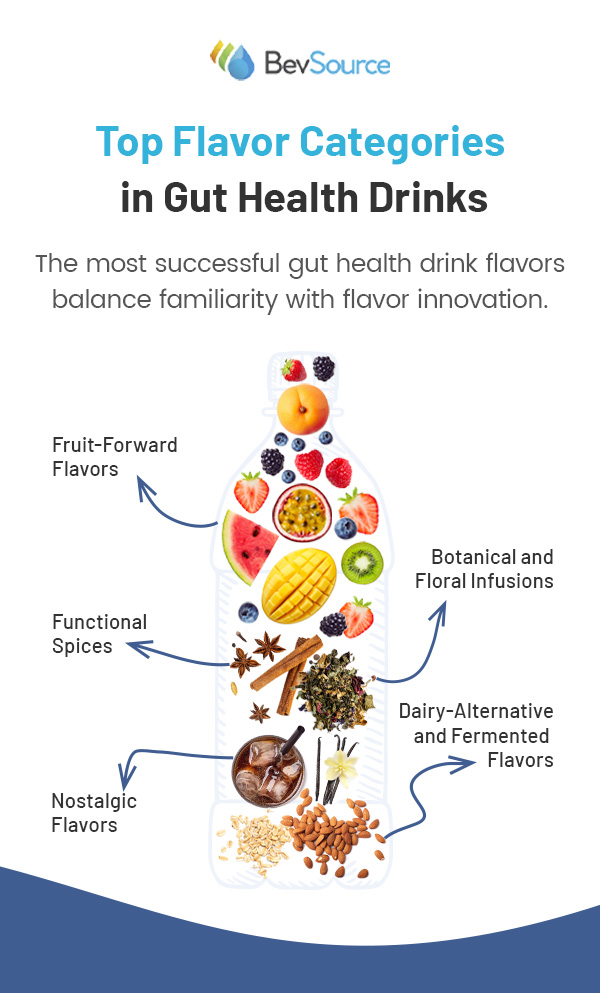
Developing successful digestive health beverages requires effectively masking off-notes, turning potential barriers like chalkiness or fermentation into sensory wins. Leading gut health flavor profiles strike a high-stakes balance, anchoring in familiar, craveable profiles while layering subtle innovations to drive trial, repeat purchase and premium pricing.
The Appeal of Fruit-Forward Flavors
Fruit flavors dominate the digestive health beverage category for good reason. Natural fruit sugars are a healthy way to balance the tanginess of functional products. These familiar profiles are gateway flavors for consumers new to functional beverages.
- Classics such as citrus (lemon, lime, grapefruit, orange) and berry blends appeal to mainstream consumers who enjoy the familiar flavors as an approachable entry point to gut health. These profiles evoke “clean,” “fresh” and “healthy” feelings and are versatile across bases, including kombucha, kefir, probiotic sodas and enhanced waters.
- Tropical fruits, including mango, passion fruit and pineapple, provide a bright acidity and natural sweetness that are effective at masking the sometimes strong, off-putting flavors of fermented bases or functional ingredients while delivering a tropical escapism that aligns with Gen Z's bold, social-media-friendly tastes.
- As the tropical fruit trend evolves, we're witnessing the emergence of more distinctive, adventurous profiles, like yuzu, guava and dragon fruit which offer visual appeal and vibrant flavors.
The Digestive Cues of Functional Spices
Spices like ginger, turmeric, cinnamon, cardamom and cloves deliver both complexity and recognized digestive benefits, making them perfect for digestive health drinks.
Ginger and turmeric are a powerhouse combination in digestive health. Ginger's anti-nausea properties and warming sensation make it ideal for morning wellness shots and kombucha bases. Turmeric adds an earthy depth and provides anti-inflammatory benefits that appeal to consumers managing digestive discomfort. Sweet-spicy fusions are also popular with younger consumers.
Popular pairings for gut health drink flavors include:
- Lemon-ginger-cayenne for metabolism support
- Pineapple-turmeric-black pepper for inflammation reduction
- Apple-cinnamon-ginger for comforting digestive relief
- Mango-turmeric-cardamom for exotic wellness appeal
The Sophistication of Botanical and Floral Infusions
Botanical ingredients add nuanced flavors that allow for premium brand positioning and differentiation on crowded retail shelves. These profiles add sophistication while supporting calming, stress-reducing or “de-bloating” narratives.
Common botanical and floral infusions include:
- Hibiscus: With its tart, cranberry-like flavor and stunning ruby color, this versatile ingredient works equally well in kombucha, water, kefir and prebiotic sodas.
- Elderflower: The delicate floral sweetness softens the acidic notes in fermented beverages, adding elegant notes to probiotic spritzers and low-sugar synbiotics.
- Rose: This flower offers a subtle, sophisticated sweetness without added sugars that elevates any digestive drink.
- Mint: This traditional digestive aid adds freshness to sparkling probiotic waters, synbiotic smoothies and ginger fusions.
- Chamomile: It's a common staple in evening digestive tonics for overnight recovery narratives.
- Lavender: Stress-relief formulations that target the gut-brain connection benefit from this calming botanical.
The Classic Comfort of Nostalgic Flavors
Formulations with classic soda shop flavors bring childhood nostalgia to functional adult beverages, reframing digestive health beverages as an enjoyable, everyday swap for traditional soft drinks. Classic soda flavors include:
- Root beer flavoring delivers familiar vanilla and sassafras notes that mask the taste of prebiotics.
- Classic cola profiles recreate soda experiences with added digestive benefits.
- Cherry cola variations can mask the taste of nootropics or adaptogens that enhance the prebiotic effects of sodas.
- Cream soda interpretations offer indulgent sweetness that balances the bitterness of functional ingredients.
Retro-inspired profiles deliver comfort with a modern edge, making gut drinks feel indulgent and shareable rather than medicinal — perfect for daily routines and TikTok virality.
The Rise of Dairy-Alternatives and Fermented Flavors
The rise of dairy-alternative and fermented flavors reflects demand from consumers who are lactose-intolerant, vegan or simply seeking nondairy alternatives. Plant-based dairy alternatives deliver creamy textures and live cultures without dairy drawbacks, while water kefir, fermented teas and almond “yogurt” drinks bring tangy, effervescent profiles.
Complementary flavors that work with fermented bases include:
- Chocolate-hazelnut for creamy oat-based probiotic drinks
- Vanilla-maple for almond milk kefirs
- Matcha-coconut for plant-based yogurt drinks
- Coffee-cacao for morning gut health beverages
How to Innovate Successful Digestive Health Beverages Flavors
In this fast-moving category, prioritizing speed to market and stringent cost control from the outset is paramount, as early decisions profoundly impact both. Beverage flavor innovation demands careful orchestration of ingredients, processing and packaging to deliver consistent quality at scale.
The following best practices prevent costly mistakes:
Strategic Flavor Selection
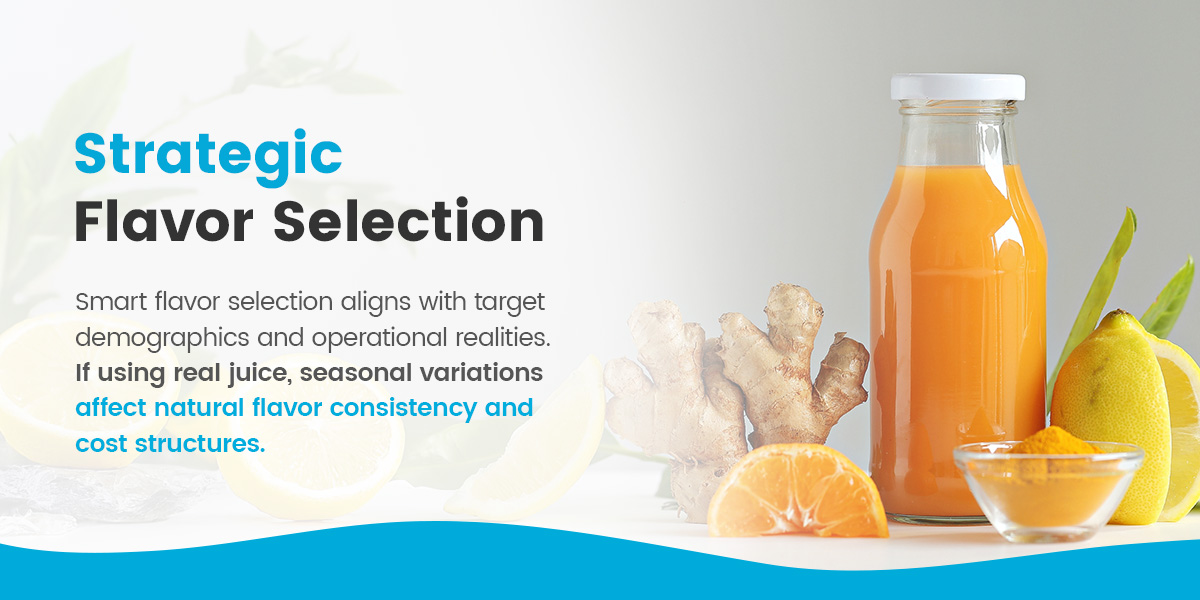
Smart flavor selection aligns with target demographics and operational realities. Regional preferences vary across markets, and supply chain considerations for exotic ingredients impact pricing and availability. If using real juice, seasonal variations can affect natural flavor consistency and cost structures.
Consider these factors when selecting flavors:
- Ingredient stability during shelf life
- Compatibility with probiotic strains or prebiotic fibers
- Masking capabilities for functional off-notes
- Cost implications as production scales
Formulation and Quality Control
Core functional ingredients like probiotics are highly sensitive to pH and temperature, demanding formulations that preserve strain viability throughout shelf life, especially challenging in fruit juices or low-pH bases. Formulators often use “overage,” adding more probiotic cultures than the label claim requires, to account for expected die-off during processing and storage. While prebiotics or synbiotics offer greater stability with fewer viability hurdles, they require more consumer education on benefits.
In any case, brands should also develop a flavor system that masks any off-notes from the functional ingredients without compromising their stability. This often involves working with flavor houses specializing in functional beverages.
Accelerated shelf-life testing is a critical step once a commercial formula has been developed. This study verifies potency claims over a product's shelf life. It is also crucial for backing up the “live and active cultures” claim.
Process authority letters are required for digestive health beverages prior to signing with a co-packer. They provide expert validation of the production process's safety and regulatory compliance — particularly for acidified or low-acid formats common in probiotic juices or fermented drinks — ensuring co-packers accept the formula without delays, avoiding costly rejections or reformulations during scale-up.
Scale-Up Validation
Pilot production runs bridge the gap between benchtop formulation success and commercial viability. By simulating full-scale manufacturing on a small scale, pilot productions can uncover scaling challenges that benchtop testing misses.
A pilot production can catch viability issues with heat-sensitive probiotics, pH shifts in fruit bases or flavor instability before a costly full production run. It also reduces risk and cost by identifying separation, off-note amplification or shelf-life failures early while providing notes on mixing, filling and packaging to streamline co-packer handoff at full production.
Consumer Acceptance Testing
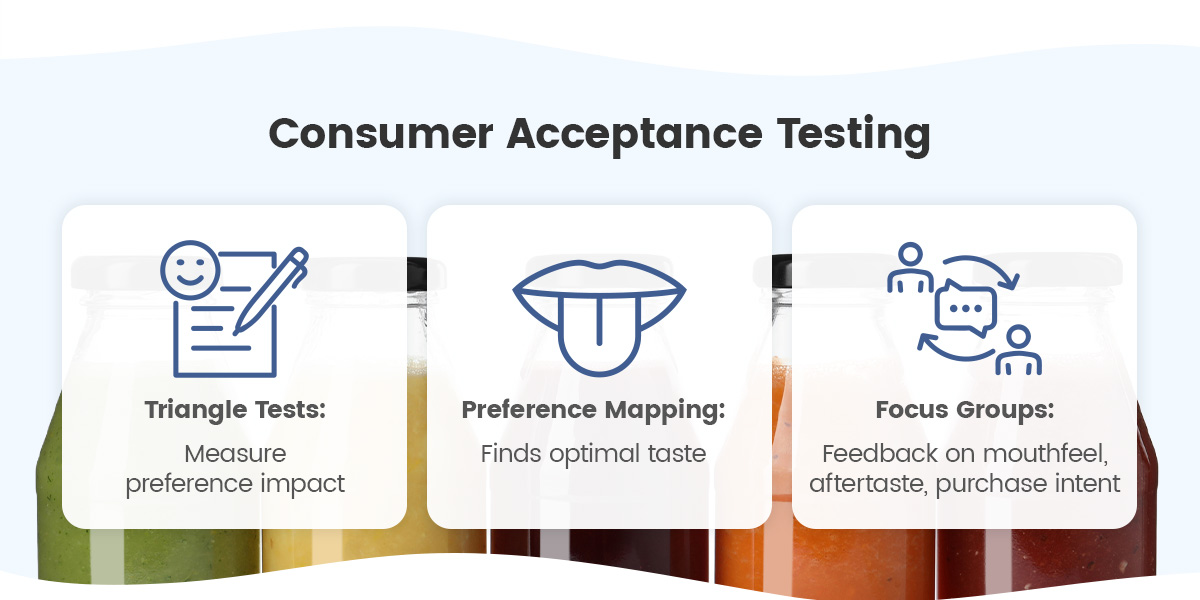
After the product development phase, sensory evaluation can validate market readiness through structured testing protocols, ensuring formulations resonate with target consumers.
- Triangle tests determine whether formula adjustments result in perceivable differences that impact consumer preference.
- Preference mapping identifies optimal sweetness, sourness and flavor intensity levels across target demographics.
- Focus groups provide qualitative feedback about mouthfeel, aftertaste and purchase intent.
Multiple rounds of consumer testing refine formulations based on demographic preferences and usage occasions. For example, morning consumption drinks require different flavor profiles than afternoon refreshments. Similarly, athletic recovery drinks need distinct sensory characteristics compared to digestive comfort beverages. Testing panels representing target markets ensure products resonate with intended consumers.
Regulatory Compliance and Labeling
Regulatory compliance and labeling exert indirect but significant constraints on flavor development in digestive health beverages, primarily through health claims, nutrition facts and ingredient disclosure rules that limit how boldly brands can tout “natural.” Organic certification may limit flavor options while increasing costs. International markets also impose varying restrictions on probiotics, prebiotics and functional ingredients.
Structure-function claims require careful substantiation to avoid regulatory challenges. Probiotic strain specificity means generic “digestive health” claims may not apply to all cultures. Prebiotic fibers need specific dosing levels to support marketing messages. Documentation requirements include certificates of analysis, allergen statements and nutritional testing that verify label accuracy.
Market-Driven Innovation Priorities
Digestive wellness trends continue to shift toward immediate, measurable benefits, as well as long-term health investments. Consumers expect products that deliver noticeable improvements in energy and comfort while providing more benefits over time. This immediacy drives demands for higher probiotic counts, more bioavailable nutrients and faster-acting digestive aids.
The increasing use of GLP-1 medications creates emerging opportunities for specialized digestive support beverages that are rich in nutrients and functional ingredients. Products addressing medication side effects like nausea or constipation represent untapped potential.
Formulations that support natural GLP hormone production through specific prebiotic fibers and botanical extracts offer complementary solutions. The intersection of digestive health with weight management, immune support and mental wellness expands formulation possibilities. Multi-benefit products require a careful balance of numerous functional ingredients, but allow for premium positioning.
Strategic Partnership Selection
Developing digestive health beverages that taste good, deliver health benefits and stand out in the market requires strategic partners with specialized capabilities for handling functional ingredients.
Expert beverage development partners de-risk innovation by using proven ingredients from vetted suppliers, applying hands-on regulatory expertise to secure process authority letters and compliant claims early, and preventing costly reformulations, delays, or co-packer rejections. They also run pilot testing and sensory validation, use bulk sourcing for cost efficiency and speed launches by anticipating production hurdles.
Develop Flavorful Digestive Health Beverages With BevSource
The digestive health beverage market offers an immense opportunity for brands that combine science-backed ingredients with winning flavor profiles. Strategic partnerships support success, control costs and help guide a successful launch while minimizing risk.
BevSource uses over 20 years of beverage development experience and a network of over 300 qualified suppliers to transform your innovative concepts into market-ready products. Our comprehensive approach addresses every aspect from initial formulation through production and quality assurance.
Contact us today to explore how our beverage development services can accelerate your path to market success.