How Women Are Driving the Shift Toward Nutrient-Dense and Functional Beverages

Refreshment is no longer enough. Today, consumers expect measurable wellness benefits from every sip, and women are at the center of that shift, spearheading many of the biggest changes in functional beverage trends.
As the primary household shoppers, women influence purchasing at home, and they're moving beyond traditional low-calorie or reduced-sugar options. Functional beverages, specifically designed to align with women's diverse health priorities, are emerging as a solution, transforming a simple beverage into a powerful daily ally for well-being.
For brands, the opportunity is clear. Functional beverages already command premium pricing and high consumer loyalty. But success depends on ingredient selection and manufacturing strategy. When brands align formulation, claims and production with women's wellness priorities, they can lead the next phase of beverage innovation.
How the Wellness Focus Is Reshaping Beverage Innovation
The functional beverage market is beyond early adoption. It now represents a core growth engine, with wellness beverages accounting for 52% of market share.
Women are at the center of that growth. Increasingly, they are moving away from calorie reduction as the primary wellness goal, seeking instead beverages that address specific health priorities, including gut health, mental focus, immune resilience and steady energy. Many see nutrition as proactive and preventive, a daily investment in long-term well-being rather than a response to immediate need.
North American functional beverage market growth is projected to reach $82.85 billion by 2031, with demand expanding across categories such as hydration, protein and mood support beverages.
These trends create both complexity and opportunity. In addition to staying stable, functional ingredients must maintain their taste, texture and shelf life. Consumers also expect clean labels — artificial additives and excessive sugar undermine credibility in functional products.
The brands gaining ground are those that align formulation, claims and production around three fundamentals:
- Clinically supported ingredients
- Sensory appeal
- Scalable production
Who's Driving This Growth?
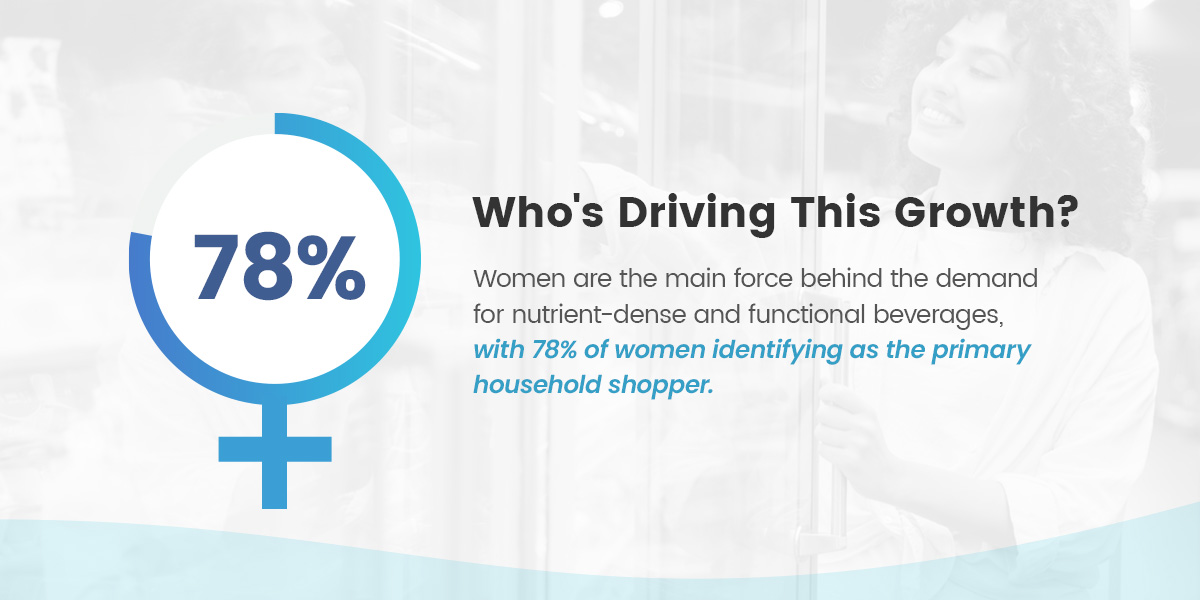
Women are the main force behind the demand for nutrient-dense and functional beverages, with 78% of women identifying as the primary household shopper. Many also manage family wellness decisions. In effect, women act as the household “wellness CFO,” evaluating ingredient lists, assessing wellness claims and determining which products align with long-term health support.
This influence is rooted in how women approach wellness more holistically. Rather than seeking single-benefit solutions, they prioritize products that support multiple aspects of health simultaneously, from energy and cognition to digestion and long-term vitality. Women also tend to engage earlier and more consistently with preventive health, stack multiple benefits into a single product, and hold brands to higher standards on labels, sourcing and claims. Together, these behaviors make women natural early adopters, gatekeepers and amplifiers of functional beverages.
This influence is especially clear in beverage purchases. Women are increasingly looking for beverages that aid in balanced nutrition and deliver functional benefits such as sustained energy, digestive support and cognitive clarity. Women also hold brands to higher credibility standards, expecting:
- Clear ingredient labeling
- Transparent sourcing
- Science-backed functional claims
In practice, this shapes which benefit platforms are gaining traction. Protein beverages are increasingly seen as tools for satiety, muscle maintenance and graceful aging. Gut health also ranks among the most important priorities, with prebiotic fibers and digestive support ingredients gaining traction across carbonated beverages, teas and hydration beverages.
Mood and cognitive function are now the top desired benefit for consumers. Adaptogens, L-theanine and other nootropic ingredients can reduce stress or improve focus during work.
Women also tailor their nutrition to life stages and shifting wellness needs:
- Young professionals seek cognitive support and stress management.
- Active adults prioritize hydration, recovery and sustained energy.
- Midlife and older women increasingly focus on protein for muscle maintenance, metabolic health and graceful aging.
Across these stages, a growing number of women are also turning to beverages that support hormonal balance, whether for cycle-related symptoms, perimenopause or menopause.
Social discovery shapes initial awareness with functional beverages increasingly found through social media, podcasts and health influencers. But repeat purchases depend on taste, ingredient transparency and credible wellness positioning. Product development must align with both scientific validation and consumer trust.
Retailer Resets: From “Better-For-You” to “Functional Sets”
The success of brands like Poppi in major retailers points to a significant change. Retailers are reorganizing beverage assortments around functional benefits, with shelf sets now emphasizing the wellness benefits women value most.
These beverages increasingly fit into daily routines rather than occasional consumption moments. Morning beverages promise sustained energy or cognitive clarity, afternoon beverages support focus or hydration, and evening beverages promote relaxation or recovery. These patterns highlight several retailer merchandising trends, such as:
- Functional soda sections featuring prebiotic and fiber-based carbonated beverages for digestive wellness.
- Active nutrition shelves with protein waters and recovery support for busy, on-the-go days.
- Enhanced hydration sets with electrolyte blends and added benefits such as minerals and nootropics for everyday hydration with an extra wellness boost.
Because shoppers often scan sets by benefit, front-of-pack messaging has to do three things fast: name the primary benefit (for example, prebiotic soda), quantify it where possible (for example, 5g of prebiotic fiber), and keep the language credible and compliant.
Taste remains the gatekeeper. Women may pick up a product for its benefits, but they only rebuy if it fits their flavor and sweetness preferences. If your product’s benefit is unclear or stretched across too many claims, it can get lost in a functional set that’s organized around one dominant promise per facing — gut, energy, hydration, mood and more.
High-Velocity Functional Sub-Categories to Watch
Women are actively shaping which products succeed in the functional beverage market. Their purchasing behavior reflects a practical wellness lens: daily nutrition, sustained energy, stress management and digestive balance. And increasingly, life-stage needs are entering the equation, from hormonal support and perimenopause to active aging and recovery.
Four sub-categories are gaining the most traction with women right now. Each represents a real product development opportunity for brands:
1. Prebiotic Sodas and Gut Health Tonics
Digestive wellness is an influential driver in functional beverage innovation. Women are more likely to seek out solutions that support gut balance, digestion and microbiome health.
As a result, pre- and postbiotic beverages have become one of the fastest-growing functional soda segments. These combinations are gaining ground precisely because they deliver a credible gut health story with a cleaner operational path to market — an important consideration for emerging brands managing cost and production complexity.
Typical formulation strategies rely on soluble fibers such as:
- Inulin
- Chicory root fiber
- Resistant dextrins, such as tapioca soluble fiber
These ingredients deliver multiple benefits, which include prebiotic functionality that contributes body and a slight sweetness to reduced-sugar beverages. For consumers managing busy schedules, gut-health beverages can offer a convenient way to increase daily fiber intake. However, formulation must carefully balance efficacy and digestive tolerance.
Gut health is no longer a single-benefit platform. It has become the gateway benefit, directly linked to metabolism, immunity and mood, which makes it a particularly strong foundation for benefit stacking and a natural fit for women's holistic wellness priorities.
For consumers managing busy schedules, gut-health beverages also offer a convenient way to increase daily fiber intake — a crucial wellness priority among women — and one of the most technically demanding to formulate for. Women are more likely than other consumer segments to actively seek out digestive support, making this one of the fastest-growing functional beverage segments.
The opportunity is bigger than it appears. Research suggests that 90% of women don't meet their daily fiber intake recommendations, making gut-health beverages a practical solution for everyday nutrition, not just digestive conditions.
That gap is widening in the GLP-1 era. Women are disproportionately represented among GLP-1 users, and for that consumer, every sip has to count. Fiber and protein in lighter, more accessible formats aren't just trend responses. They're a direct formulation brief driven by a meaningful shift in how a significant consumer segment approaches daily nutrition.
Formulation has moved well beyond single-ingredient prebiotic fiber. Prebiotic, probiotic and postbiotic systems are increasingly combined, with postbiotics especially gaining ground. As bioactive compounds produced through probiotic fermentation, they don't require live organisms to remain active, making them shelf-stable, resilient through standard thermal processing, and a cleaner operational path to market. For emerging brands managing cost and production complexity, that's a meaningful formulation advantage.
For brands targeting women's digestive wellness, the formulation bar is high — but so is the consumer reward. Products that deliver a credible gut health story with clean ingredients, precise dosing and strong sensory performance are among the most defensible in the functional beverage category.
2. RTD Protein and Active Nutrition
Consumers are well aware of the role protein plays in general well-being.
Protein is no longer a functional differentiator — it's the new baseline. Nearly 40% of U.S. households are now buying protein RTDs, and the category grew 13% in 2025 to a total market value of $7.6 billion. That level of penetration is far more descriptive of a consumer expectation than an emerging trend.
For brand owners, including protein is no longer the question. It's about the formulation. Who is the target consumer? Which stage of life are they at? How can you stack additional benefits onto a protein foundation without sacrificing taste, clarity or shelf stability?
For women specifically, protein has become a daily wellness tool rather than a performance ingredient, sought for satiety, metabolic health, active aging and increasingly, as a necessity for the growing segment of women using GLP-1 medications. That combination of mainstream demand and medically-driven need is why lightweight, great-tasting protein formats are among the most defensible product investments in the category right now.
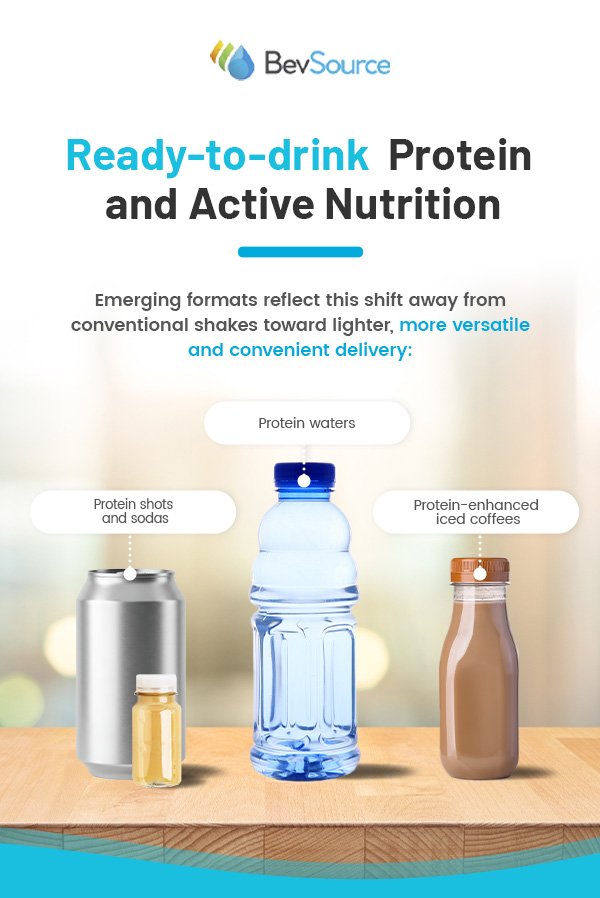
Emerging formats reflect this shift away from conventional shakes toward lighter, more versatile and convenient delivery:
- Protein waters
- Protein-enhanced iced coffees
- Protein shots and sodas
Of these, clear protein is the fastest-growing RTD sub-segment, driven by women who want the functional benefit without the texture or heaviness of traditional protein drinks. This segment led sales growth in 2025, with a 34% increase.
The protein opportunity is broad enough to span morning coffee, afternoon hydration and evening recovery, making it one of the most format-flexible sub-categories in functional beverages – ideal for brands targeting women's wellness.
3. Mood, Focus and Stress Support
Mood support has become a top contender among desired benefits in functional beverages, but that preference didn't happen overnight. It reflects a broader cultural reset in how consumers approach stress, focus and recovery: less about pushing through, more about building daily rituals that support mental resilience.
The numbers back it up. Magnesium-containing beverages grew 57% according to SPINS data, making it the fastest-rising functional ingredient in the mood and relaxation space. Magnesium has become the anchor ingredient for the evening wind-down ritual, a specific consumption occasion that brands are increasingly designing around.
Adaptogens, such as ashwagandha, rhodiola, and L-theanine, remain core to the cognitive support and stress management platform, particularly for the morning and afternoon occasions where focus and calm energy are the primary need.
Together, these ingredients are defining a new beverage occasion architecture: morning clarity, afternoon focus, evening recovery. For brand owners, that's not just a positioning framework but a product line strategy.
Formulation requires care on two fronts. Adaptogens like ashwagandha carry strong botanical notes that need masking through fruit-forward or botanical flavor systems. Dosing must also stay within structure-function guidelines — claims like “supports calm focus,” “helps manage everyday stress,” and “promotes mental clarity” are well-established and defensible. Bold therapeutic claims invite regulatory scrutiny and erode the consumer trust this category depends on.
4. Functional Hydration: Beyond Electrolytes
Simple electrolytes are table stakes. The brands winning in hydration today are using it as a platform, stacking gut health, cognitive support, mood and recovery benefits into a single drink that fits naturally into an all-day wellness routine rather than athletic recovery.
That shift is particularly relevant for women. Hydration has never been purely about fluid replacement for this consumer. It's always been part of a broader wellness ritual. What's changed is how sophisticated the formulation has become. Electrolyte blends that once led with sodium, potassium and magnesium are now being engineered around specific occasions like morning focus, afternoon energy and evening wind-down.
Magnesium deserves particular attention in this context. It's doing double duty — appearing both as a core hydration mineral and as the anchor ingredient in mood and relaxation beverages. In women's hydration products, this nutrient bridges the gap between physical recovery and mental restoration in a single ingredient, making it one of the most versatile tools in a functional hydration brief.
Benefit stacking is now the core innovation model in this category. Hydration beverages increasingly combine electrolytes with nootropics, adaptogens for stress support or protein for recovery, delivering multiple wellness priorities in one convenient format. For women managing busy schedules, that convenience factor is as important as the functional benefit itself.
Formulation complexity scales with the benefit stack. Combining multiple functional systems requires careful compatibility testing. Validating ingredient compatibility early in development prevents costly reformulation downstream.
Women-Focused Claims and Compliance
Women in the functional beverage space are discerning, well-informed buyers who scrutinize ingredient lists, sourcing and wellness claims before purchasing. That raises the credibility bar significantly and makes claims strategy one of the most important decisions a brand makes.
Structure-function claims are the safest and most defensible approach. These statements describe how ingredients support body function without implying medical outcomes: “supports calm focus,” “helps manage everyday stress” and "promotes digestive balance." Unsubstantiated or overstated claims can erode consumer confidence and invite regulatory scrutiny.
Hormonal wellness — increasingly relevant as brands target perimenopause and life-stage nutrition — should stay anchored in broader wellness language: “supporting hormonal balance” or “helps the body adapt to stress” rather than anything that implies treatment or cure. GLP-1 adjacent claims around satiety and metabolic support are similarly sensitive. The consumer interest is real and growing, but claims must stay within structure-function guidelines and be supported by the ingredient's evidence base.
Formulation Playbook
Formulating functional beverages for women requires more than adding trending ingredients. Products must deliver meaningful benefits while maintaining excellent taste, digestibility and panel transparency.
Build the Benefit Stack Without Breaking Taste
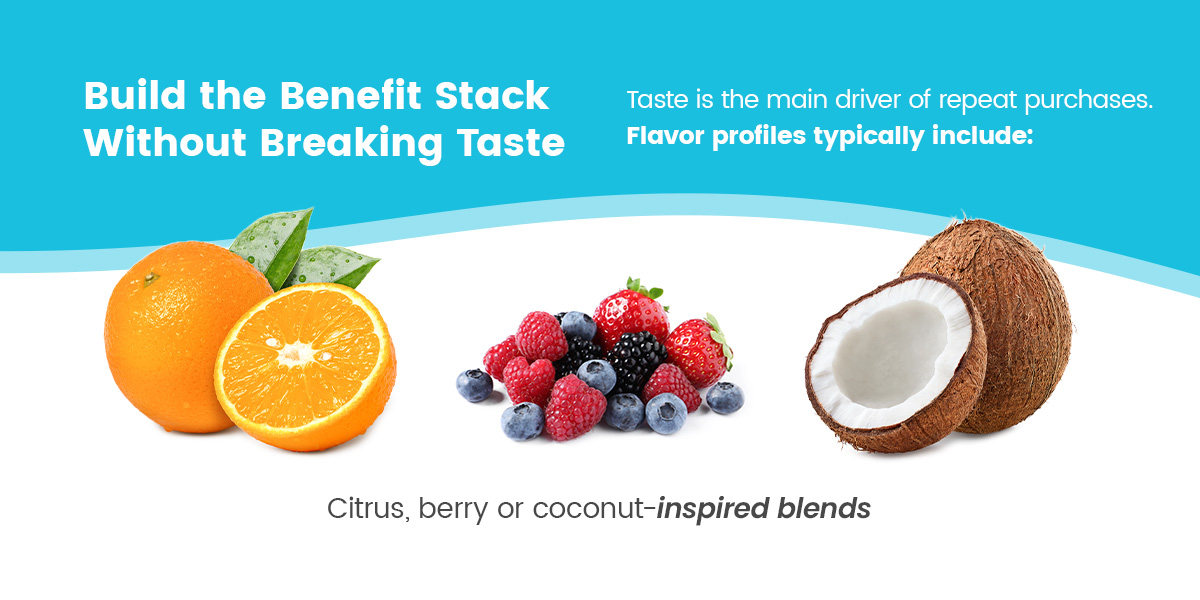
Taste is the main driver of repeat purchases. Functional ingredients must integrate seamlessly into the sensory experience.
Flavor profiles typically include citrus, berry or coconut-inspired blends that feel refreshing rather than overly sweet. Many adaptogens carry earthy or bitter taste profiles — ashwagandha, in particular, has strong botanical notes. Developers rely on fruit-forward flavor systems or botanical blends to mask these characteristics. Some botanical extracts degrade when exposed to heat or oxygen, so ingredient stability must also be validated.
Formulate With Processing Constraints in Mind
In functional beverages, ingredient selection often determines the viable processing path. Heat-sensitive compounds, protein systems and certain botanicals can limit whether a product is compatible with hot-fill, retort or other thermal processes, narrowing your options before a single production decision is made.
Developers must evaluate how formulation choices impact stability, potency and shelf life under real manufacturing conditions, not just in benchtop development.
Shelf-life studies are a mandatory step to confirm that efficacy and target ingredient levels are maintained from prototype to shelf. Pilot production runs are a valuable and often underutilized tool for catching formulation and processing issues before committing to full commercial scale.
Use Packaging That Educates and Converts
Clear messaging helps shoppers quickly evaluate product benefits. Front-of-pack messaging should clearly state the product's primary value, such as “electrolytes for hydration” or “5 grams of prebiotics for digestive support.”
It's also important to be transparent in relation to the beverage's nutritional profile. Consumers quickly become skeptical of products that make nutrition claims but have high levels of sugar, saturated fats and salt.
Functional beverages can perform well when merchandised near adjacent wellness categories, such as protein snacks or sports nutrition products.
Operations and Supply Chain Realities
Compared to traditional beverages, functional products introduce greater operational complexity: specialized ingredients, tighter regulatory scrutiny and more demanding quality requirements that touch every stage of production and supply chain planning.
Rapid demand can strain production and supply chain systems quickly, as seen in seasonal spikes. Hydration beverages may see large demand increases in the summer months, where beverages like vitamin water may be more popular during cold and flu season.
Brands must secure manufacturing capacity ahead of need, not in response to it. Selecting the right co-manufacturer is one of the most consequential early decisions a functional beverage brand makes. Production partners should support the beverage's processing requirements, ingredient sensitivities and packaging format. Many functional beverages rely on specialized ingredients that require careful sourcing, handling and storage conditions that not all co-manufacturers can accommodate.
Demand planning adds another layer of complexity. Functional beverage categories can scale quickly in response to trend momentum or seasonal demand. Brands that haven't secured manufacturing capacity ahead of that growth risk losing shelf placement and retailer confidence at exactly the wrong moment.
Retailers, too, are increasingly requiring supplier documentation, including:
- Certificates of analysis
- Allergen statements
- Traceability records
These demands make supply chain transparency a commercial requirement, not just a best practice.
Cost discipline is harder in functional beverages than it appears at concept stage. Specialized ingredients and minimum order quantities can erode margins quickly, often before a brand reaches the volume where unit economics improve. Building the cost model at the formulation stage, not after, is what keeps a compelling concept commercially viable.
The 6-Step Commercialization Checklist
Brands entering the functional beverage category must align consumer insights, formulation strategy and operational execution. Women's wellness priorities should guide each step of product development:
- Define use case: Define the consumer promise and life-stage use case, whether morning energy, digestive support or evening relaxation. Each use case requires different formulations.
- Validate claims: Confirm beverage versus supplement status. Ensure claims stay within set structure-function guidelines.
- Verify processing compatibility: Check that manufacturing partners can support the processing requirements driven by your ingredient choices and packaging format.
- Validate before commercial production: Conduct pilot runs to validate taste, stability and nutritional targets before committing to full commercial production.
- Design packaging: Ensure packaging clearly communicates benefits and aligns with functional category sets.
- Build supply chain resilience: Secure ingredient supply, confirm production capacity and validate margin structure before launch.
Partner With BevSource for Beverage Development From Concept to Shelf
As women’s wellness priorities continue to reshape beverage innovation, brands need more than formulation support. They need a partner who can translate complex functional concepts into scalable, market-ready products.
BevSource helps brands navigate these complexities. Our team supports ingredient strategy, formulation development, manufacturing alignment and supply chain planning. We help brands transform functional beverage concepts into successful products on the shelf. Speak to a beverage expert today to tap in to women's health beverage trends and turn your beverage idea into reality.