Plant-Based Protein Beverage Innovation
The plant-based protein drinks market has emerged as one of the most dynamic sectors in the beverage industry, with projections indicating it will exceed $2.3 billion by 2032. This explosive growth reflects a fundamental shift in consumer preferences, with high-protein drink launches more than doubling between 2020 and 2024. Plant-based protein drinks are a significant part of this growth, as health-conscious consumers seek sustainable, nutrient-rich alternatives to dairy-based options.
To understand the nuances of this evolution and what it takes to succeed in this competitive landscape, we spoke with Rick Ray, plant-protein beverage expert at Axiom Foods, who has witnessed the industry's transformation firsthand. Ray notes that success in this category requires formulation expertise, deep consumer understanding and continuous innovation to overcome technical challenges and deliver products that meet evolving customer expectations.
This article explores the consumer trends and innovation strategies shaping this fast-moving category.
Consumer Trends Driving the Rise of Plant-Based Protein Drinks
The explosive growth in plant protein beverages reflects a broader shift in consumer behavior and values. It highlights fundamental shifts in how consumers approach nutrition, sustainability and dietary choices, moving from “fitness-focused” to “wellness-oriented.” Once the domain of athletes, the protein beverage market has expanded beyond fitness enthusiasts to include mainstream consumers across all demographics.
The Protein Revolution
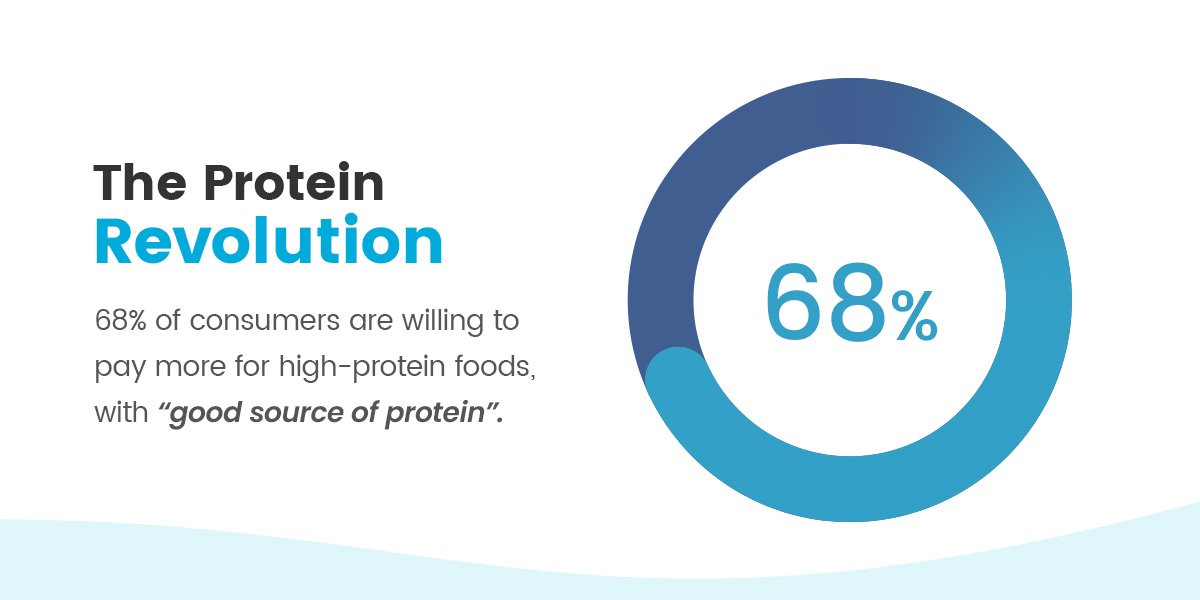
As consumers embrace holistic wellness, protein has become a cornerstone of everyday nutrition. According to Ingredion's 2023 proprietary research, 68% of consumers are willing to pay more for high-protein foods, with “good source of protein” ranking as the top health benefit considered when selecting food and beverage products. Drivers behind increased protein consumption include:
- Supporting active lifestyles and muscle maintenance
- Contributing to healthy aging and balanced nutrition
- Sustaining daily activities and mental focus
- Supporting satiety and metabolic health
The Clean Label Imperative
Transparency has become nonnegotiable in protein beverage formulation, with 40% of consumers checking labels for simple, recognizable ingredients and transparent sourcing.
Ray observes, “Consumers are more educated than ever. They're not just looking for protein — they're looking for clean, sustainable sources that align with their values and dietary needs. That's why pea protein has exploded — it ticks all the boxes: non-allergenic, sustainable, and highly functional. It’s the inclusive choice for the modern consumer.”
Growing Awareness of Plant Protein Sources
Consumer familiarity with diverse protein sources continues to expand well beyond whey and soy. Today's shoppers are increasingly willing to experiment with new sources of protein that fit evolving dietary goals, from lactose-free lifestyles to vegan, kosher or allergen-conscious diets. The inclusive nature of plant proteins allows brands to appeal to a broad range of consumers seeking variety without compromise.
Sustainability and Ethical Alignment
Environmental and ethical considerations have become central to the rise of plant-based protein beverages. Many consumers view plant proteins as planet-positive choices, citing their lower greenhouse gas emissions, reduced land and water use, and non-animal sourcing. These sustainability associations strengthen emotional connections with brands that communicate transparency about sourcing and impact. For a growing segment of consumers, particularly Gen Z and millennials, a product's footprint matters as much as its flavor or function.
The Flexitarian Movement

Today's protein consumer represents a diverse demographic united by flexibility in protein sources. Flexitarian consumers prioritize health without committing to strict dietary restrictions. They seek options that deliver tangible nutritional benefits, regardless of the label, as long as they're minimally processed and align with their goals. Flexitarians bridge the gap between mainstream and plant-based consumers, driving demand for inclusive, versatile protein beverages.
Challenges in Plant-Based Protein Beverage Development
Developing successful plant-based protein beverages can be a challenging task. Multiple technical, sensory, nutritional and economic challenges can limit innovation, requiring expertise and careful formulation to deliver products that meet consumer expectations.
The Taste and Texture Dilemma
Different plant sources contribute distinct off-notes that can alienate consumers accustomed to the neutral flavor profile of dairy proteins. Because plant proteins differ structurally from dairy proteins, sophisticated formulation approaches are required to optimize taste and mouthfeel.
Common flavor challenges include:
- The “beany” flavor of soy proteins from lipid oxidation
- "Grassy" notes of pea proteins from saponin compounds
- The “earthy” taste of hemp proteins due to the chlorophyll content
- Grittiness of rice proteins caused by larger particle sizes
- Dry or astringent aftertaste in some plant proteins
Technical and Functional Challenges

Solubility is a critical quality factor impacting consumer acceptance. Many plant proteins demonstrate poor water solubility, leading to visible sediment accumulation that may signal a quality issue to consumers.
Ray explains, “If you add too much protein, everything's looking to dissolve in the water. And if there's too much protein, it's going to absorb water because that's what proteins want to do. They want to absorb water, and then they will kind of clump together as they're trying to absorb water and hold themselves together and cause precipitation.”
Another issue is that most plant proteins precipitate in acidic environments. Ray elaborates, “Some pea protein precipitates out more than others, depending on what is in your beverage, like coffee. You know, people have been adding pea protein to coffee. The coffee beans have acidity, and depending on whether you use, let's say, a Mexican coffee bean that's a medium roast versus a Colombian coffee bean, which is a dark roast, there are more acids. One of them is going to cause the protein to precipitate because there's more acid.”
Other technical hurdles include:
- Stability: Proteins can denature during processing, such as ultra-heat treatment, which can impact texture, flavor and nutritional value.
- Viscosity: Managing the appropriate thickness of the beverage without chalkiness can be challenging.
- Shelf life: Plant proteins can separate or degrade in storage, impacting texture and nutritional value over time.
The Nutritional Gap

Plant proteins are considered nutritionally incomplete, which presents a hurdle for brands seeking to make strong nutritional claims. The Protein Digestibility Corrected Amino Acid Score provides a standardized measure of protein quality, with a score of 1.0 indicating complete proteins with excellent digestibility.
Plant proteins often score lower because they're deficient in one or more essential amino acids. For example, rice protein is typically low in adequate lysine, while pea protein can be deficient in methionine content. This deficiency causes challenges for brands targeting sports nutrition or meal replacement categories where complete protein profiles are expected.
Bioavailability also varies, meaning even proteins with seemingly adequate amino acid profiles may not deliver the same nutritional benefits as dairy proteins.
The Economic Hurdle
Cost considerations significantly affect protein beverage innovation strategies. Whey protein benefits from decades of infrastructure development as a cost-effective by-product of the massive dairy industry. Its established supply chains and processing facilities result in economies of scale, which are difficult for newer plant protein sources to match.
In contrast, plant proteins require dedicated agricultural supply chains, substantial R&D investments and specialized processing facilities. These capital-intensive requirements result in higher ingredient costs, which challenge product pricing strategies.
Ray provides a perspective on the economic reality. “When you're competing with whey, you're competing with the economics of a century-old industry. Whey is a by-product, which gives it a huge historical cost advantage. Building a plant protein supply chain from the farm up requires massive investment in agriculture and technology, and that's reflected in the price. It's a different economic model entirely.”
Plant-Based Protein Beverage Innovation and Opportunities for Differentiation
Despite the challenges faced by plant protein beverage formulation, the category is seeing remarkable innovation. From novel protein sources to sophisticated processing techniques, the industry continues pushing boundaries to deliver products that meet and exceed consumer expectations. These advances offer brands the opportunity to differentiate themselves through unique formulations and targeted benefits.
The Expanding Protein Pantry
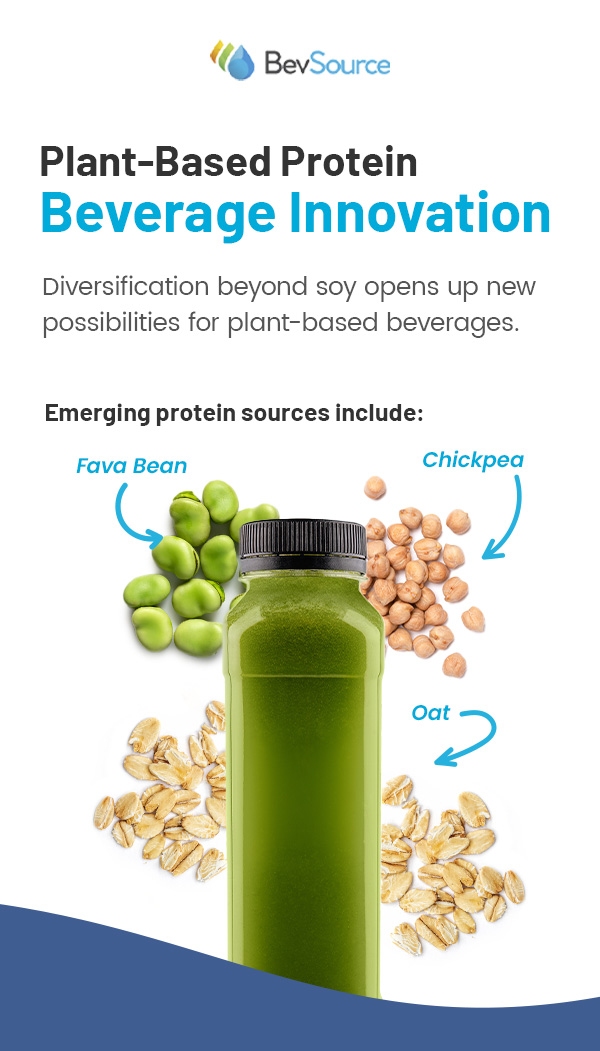
Diversification beyond soy opens up new possibilities for plant-based beverages. Each protein source offers unique functional properties that, when leveraged correctly, can improve taste, texture and nutritional value.
Pea protein beverages emerged as the growth leader following disruptions in the rice protein market. Ray recounts, “We were selling ridiculous amounts of rice protein. Then, the Chinese government shut down facilities that made rice starch for MSG production. The pea protein companies stepped in with something pretty close that came in at a lower price, so many people started making the switch. The pea protein's smoother taste and better price point captured the market.”
Emerging protein sources include:
- Fava bean, with excellent emulsification and a naturally creamy texture
- Chickpea, which has a clean flavor profile requiring minimal masking
- Oat, for a smooth mouthfeel
Upcycled protein sources, which involve protein extracted from agricultural byproducts, are another exciting development. One example is canola protein. Upcycling reduces food waste, lowers environmental impact and provides unique amino acid profiles that appeal to eco-conscious consumers.
Optimizing Amino Acid Profiles Through Blending
Blending plant proteins to create amino profiles is a fundamental breakthrough in plant protein nutrition, overcoming the nutritional limitations of individual sources.
Ray explains, “No single plant protein is perfect, but blending is where the magic happens. By combining a pulse protein like pea, which is high in lysine, with a grain protein like rice, which is high in methionine, we create a synergistic blend. The result is a complete amino acid profile that rivals whey, giving brands a powerful nutritional story for their vegan consumers.”
Mastering Mouthfeel
Today's plant protein beverages benefit from advanced formulation and processing techniques to enhance mouthfeel and reduce off-notes.

“The old ‘beany’ flavor is a thing of the past for high-quality pea proteins. Through better sourcing and proprietary processing, we can now deliver a protein that's incredibly clean and neutral. It gives flavorists a blank canvas to work with, rather than forcing them to cover up unwanted notes. It's the difference between starting with a problem and starting with a solution.”
Updated processing techniques for improved texture include the following:
- High-pressure homogenization to reduce particle size and eliminate grittiness.
- Microencapsulation to protect proteins and mask off flavors.
- Enzymatic treatment for better solubility.
- Optimized spray drying for uniform particles with improved dispersibility.
Additionally, hydrocolloid systems like gellan gum, pectin and acacia gum enhance stability and mouthfeel.
Overcoming Off-Notes
Flavor technology has advanced to address bitterness and metallic notes, encouraging consumer acceptance of plant protein beverages. Bitterness blockers work at the molecular level, using compounds that bind to bitter taste receptors on the tongue, effectively preventing the perception of unwanted flavors without contributing their own taste profiles.
Natural masking agents combine plant-derived compounds that interact with specific taste receptors to neutralize bitter peptides and metallic notes characteristic of many plant proteins. These include modified citrus extracts, fermented flavor modulators and proprietary blends of amino acids that enhance sweetness perception.
Supplier selection ensures a better, smoother taste of plant-based protein beverages. High-quality plant proteins like Axiom Foods' pea protein address solubility, smell and taste issues, offering a cleaner, smoother and creamier mouthfeel.
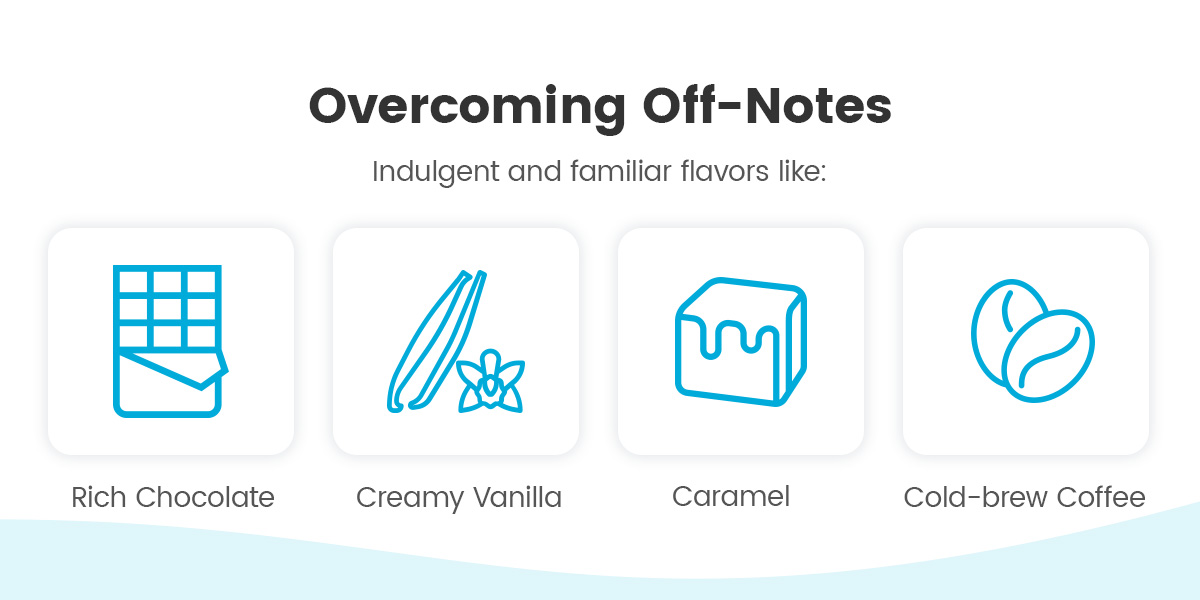
Strategic flavor selection is also important in developing craveable products. Indulgent and familiar flavors like rich chocolate, creamy vanilla, caramel and cold-brew coffee are effective in masking residual off-notes.
The Innovation for Acidity and Clarity
Breaking the pH barrier was a transformative achievement, enabling the creation of new protein beverages in previously unattainable categories. As Ray elaborates, “Historically, the biggest technical barrier for plant proteins was pH. Most would fall apart in an acidic environment, limiting them to neutral, milky beverages. You couldn't put them in a sports drink or a carbonated beverage because the protein would just precipitate out. That was the wall we had to break through to truly compete with whey.”
With technological innovations, companies can now develop stable plant proteins that can be mixed into low-pH, acidic drinks, such as coffee or even Coca-Cola, for more format options and a wider consumer reach. “The real game-changer is creating plant proteins that are 100% soluble and stable in low-pH, acidic beverages. This unlocks entirely new categories that were previously off-limits — think clear protein waters, fortified juices, sports recovery drinks and even carbonated functional beverages. It closes the functional gap with whey and opens up a massive field for innovation.”
As an example, Ray points to Axiom's VegOtein™ CLEAR pea protein, which is 100% soluble in water, has a protein concentration greater than 85% — so you don't need to use as much — and better bioavailability.
The Rise of Functional Fortification
Brands are increasingly differentiating themselves through value-added ingredients, creating new opportunities for innovation beyond the gym. This strategy allows brands to command premium positioning while addressing multiple, targeted consumer needs within a single product.
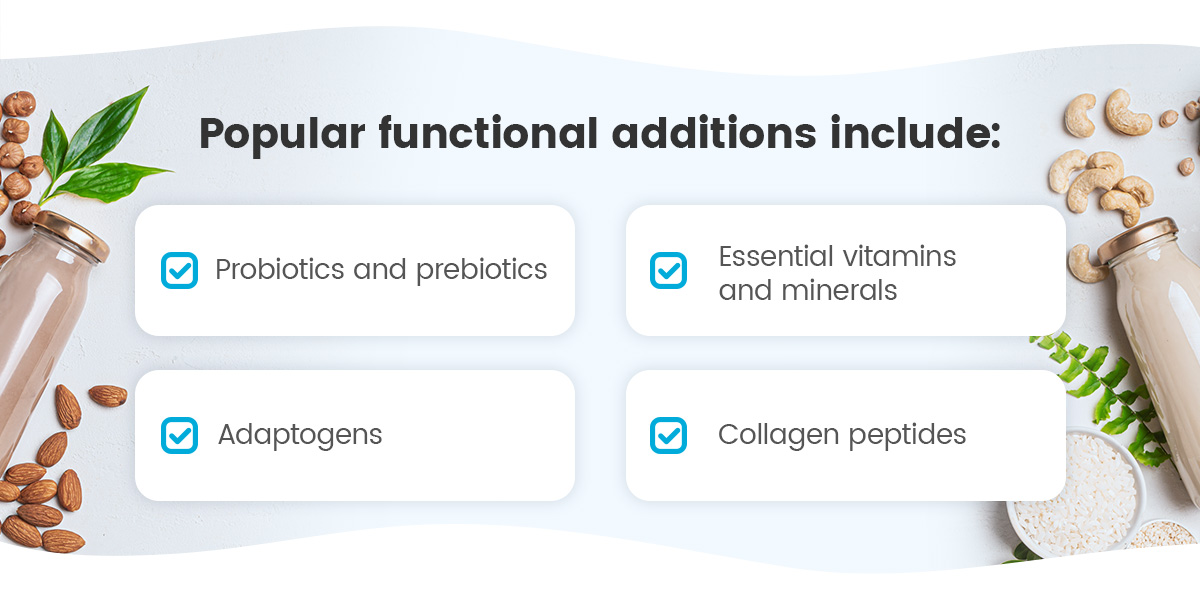
Popular functional additions include:
- Probiotics and prebiotics for gut health
- Adaptogens like ashwagandha and L-theanine for stress and focus
- Essential vitamins and minerals (like B12 and D) to fill nutritional gaps in plant-based diets
- Collagen peptides for enhancing beauty-from-within claims
The Premiumization Opportunity
Successfully communicating value propositions transforms cost challenges into premium positioning opportunities. Consumer research indicates a willingness to pay more for products that deliver clear benefits beyond basic nutrition, such as those labeled as all-natural, with no added sugar, or offering digestive health benefits.
Ray explains this economic discussion. “Brands are realizing this isn't just a cost game — it's a value game. Consumers are proving that they will pay a premium for clean-label, sustainable, and non-allergen products that deliver on both taste and performance. Our job as an ingredient supplier is to provide the technology that makes that premium value undeniable to the person drinking it.”
Protein for Every Occasion
Understanding when and how consumers use protein beverages is critical for product innovation and positioning. Occasion mapping, analyzing consumption moments and corresponding needs, allows brands to tailor both formulation and format to specific use cases.
Key usage occasions include:
- Pre- or post-workout: Consumers seek fast-digesting, high-protein options to support muscle recovery and performance.
- Meal replacement: Products that deliver balanced nutrition, including protein, fiber and micronutrients, appeal to busy consumers seeking convenient, on-the-go meals.
- Snack: Smaller-portion protein beverages satisfy hunger while maintaining calorie control and provide functional benefits like sustained energy.
- Beauty ritual: Protein combined with plant-based collagen, vitamins or other skin- and hair-supporting ingredients fits wellness routines that emphasize beauty-from-within benefits.
Format diversification supports these occasion-based strategies. Ready-to-drink beverages, powder sticks and shots allow consumers to choose the format that best suits their lifestyle and timing.
Advances in protein technology have expanded formulation possibilities, enabling new formats like protein shots that pack concentrated protein levels into smaller servings. These innovations allow brands to align product attributes directly with usage occasions, enhancing relevance and consumer acceptance.
Unlock Plant-Based Protein Innovation With BevSource Expertise
The plant-based protein beverage market presents immense opportunities for brands that can balance taste, nutrition and innovation. Success requires navigating complex challenges from ingredient sourcing through full-scale commercialization.
Ray notes, “The innovation curve in plant protein is incredibly steep. The products we can create today were impossible just five years ago. For brands willing to embrace these new technologies, the opportunity to create delicious, highly functional, and sustainable beverages is enormous.”
BevSource is the ideal partner for navigating this complex landscape, providing extensive beverage development services from concept to commercialization. Our understanding of plant protein technologies, established supplier relationships and formulation expertise helps brands overcome technical challenges while capturing market opportunities.
As Ray notes, “BevSource [reached] out to all the suppliers and said send me what you got. And they've done their internal testing. They've already saved the product development people a ton of time because they've already screened everything.”
Contact BevSource today to explore how our services can help you innovate in the plant-based beverage space and capture the loyalty of today's health-conscious consumers.