The Growing Women's Health Market

Women's health has become one of the fastest-growing segments in consumer packaged goods, fueled by rising demand for functional products that support hormonal balance, sustained energy, gut health and overall well-being. Today's shoppers are reading labels more closely and seeking convenient, everyday solutions — often in beverage form. This shift marks a powerful market evolution: women are no longer settling for one-size-fits-all wellness. They want products formulated for their specific physiological needs and are rewarding brands that deliver clear, science-backed benefits.
For beverage brands, the women’s health movement isn't just a trend — it’s an opportunity to lead innovation through targeted functionality, clean-label design and purpose-driven storytelling. Brands that understand women's health needs can carve out space in this growing category.
The Key Drivers of Growth in Women's Health Beverages
As women make health and wellness choices based on their life stage, hormonal health, digestion, energy levels, or preventive wellness goals, the demand for functional women's health beverages increases. Brands that address these specific needs with thoughtful science-backed formulas designed around women’s priorities are well-positioned to capture this momentum.
A growing preference for proactive, benefit-driven nutrition is driving the adoption of functional beverages in everyday use. Seeking “hydration with purpose” rather than basic refreshment, women are looking for products that match their personal health goals and fast-paced lifestyles. Convenience plays a central role, making ready-to-drink (RTD) formulas a preferred choice. With clean labels and purposeful ingredients guiding their purchasing decisions. These expectations underscore the importance of developing formulations that are both effective and easy to understand for consumers.
The growing women's health market reflects the global shift toward targeted functionality. Within the broader functional beverage category, women's health-focused functional drinks are driving measurable growth across regions and channels. Here's a regional outlook on this segment's growth globally:
- North America dominates the market, accounting for a size of $15.6 billion.
- Europe follows with a $12.1 billion market size.
- The Asia Pacific, including Australia, Japan, India, China and Singapore, is also growing rapidly, with a market size of $9.8 billion.
As interest in proactive and preventive care rises, both established companies and new entrants are investing in fortified beverages designed for women's unique physiology. Retailers are also dedicating more shelf space to products supporting specific health outcomes, creating added visibility for brands.
Key factors shaping this category's acceleration include:
- The rising focus on preventive care, as consumers look for convenient tools to support their health.
- Increased awareness of women's nutritional needs, including hydration, minerals, adaptogens and cycle-supporting ingredients.
- Greater awareness of women's health topics, expanding interest in products that address PMS, menopause, stress and energy.
- Growth of functional ingredients supported by research and consumer familiarity.
- Expansion across retail and e-commerce, supporting easier access to specialized beverage options.
Emerging Trends Shaping the Women's Health Beverage Category
Trends in the women's health beverage landscape are advancing with consumer expectations, broadening beyond basic wellness and moving into more value-aligned, purpose-driven choices. Several distinct trends are influencing product formulations and their introduction to the market, shaping the next wave of innovation.
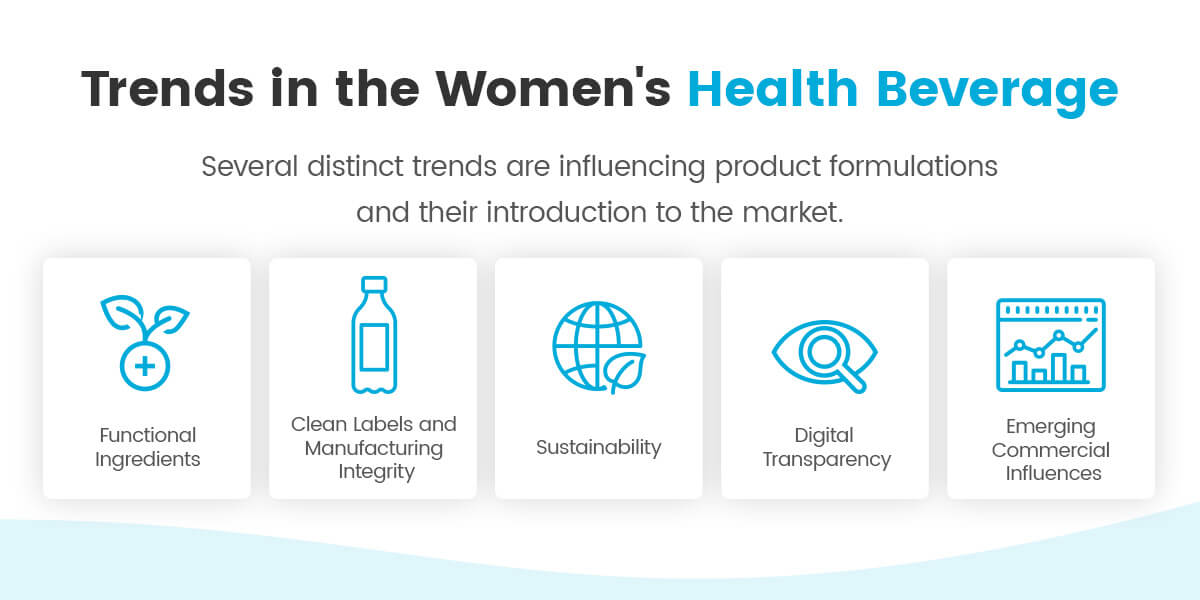
Functional Ingredients
One major trend shaping women's wellness beverages is the growing demand for functional beverages that support overall well-being. Women are increasingly choosing products that address multiple, interconnected areas of health rather than targeting a single function. Beverages that promote hydration with added nutritional support, or that link wellness with cognitive and emotional balance, reflect this integrated approach. As a result, brands are developing products that support the body’s systems holistically instead of treating each in isolation.
Clean Labels and Manufacturing Integrity
Interest in clean manufacturing is also on the rise. Consumers want reassurance that the processes behind their beverages are consistent, compliant and aligned with modern quality expectations. This focus now extends beyond ingredients to include allergen management, batch consistency and facility certifications. Growing awareness of how processing influences product integrity is raising the standard for what qualifies as both “clean” and “trusted.”
Sustainability
Sustainability is becoming more grounded in measurable commitments. Consumers increasingly expect tangible efforts, such as reduced water use or commitments to renewable energy initiatives and packaging solutions that minimize environmental impact without compromising product stability or shelf life. The shift from general “green” claims to verified environmental performance signals a more informed consumer mindset.
Digital Transparency
Transparency is equally important. Consumers increasingly expect easy access to sourcing details, quality testing results and formulation rationales through product pages, QR codes or online databases. This digital transparency fosters trust by letting consumers independently verify product authenticity and efficacy.
Emerging Commercial Influences
Several other commercial trends are shaping the direction of women's wellness beverages, including:
- Personalized selection tools that help consumers identify beverages tailored to their needs and preferences.
- Nutrient optimization, emphasizing formats that deliver vitamins, minerals and functional ingredients in easy-to-absorb forms.
- Lifestyle alignment is influencing flavor, format and packaging choices as consumers look for options that fit work, travel and family schedules.
- Holistic recovery support, driving interest in beverages that help the body adapt to busy routines, strenuous activity or disrupted sleep patterns.
Together, these trends reflect a more sophisticated marketplace where consumers expect scientific credibility, intentional formulation and a clear connection between a beverage's purpose and its tangible benefits.
Top Functional Ingredients for Women's Health
Interest in beverages designed for women's health continues to expand across formats and ingredient categories. Functional waters, RTD teas, plant-based beverages and nutrient-forward tonics are resonating with consumers seeking simple, effective ways to support daily wellness. Each format offers a different advantage — whether it's light hydration, a mindful daily ritual, familiar flavor profiles or concentrated nutrition.
Within these formats, several ingredient categories are becoming central to women's wellness. These ingredients address areas commonly prioritized across life stages, including metabolism, immune support, skin integrity and overall vitality. Today's consumers want ingredients they recognize, but also expect them to deliver measurable results. These ingredients include:
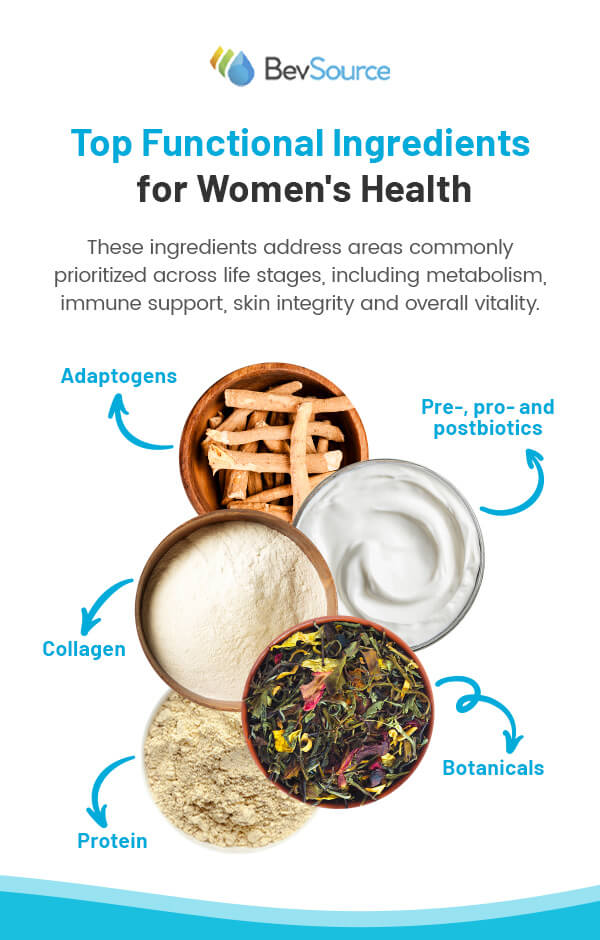
- Adaptogens: Adaptogens continue to gain traction for their ability to help the body manage physical and mental stress. Typically derived from roots, herbs or mushrooms that have a long history of traditional ingredients like rhodiola, ashwagandha and reishi attract strong consumer interest. In beverages, adaptogens promote focus and sustained energy throughout the day. Their versatility makes them well-suited for teas, functional waters and sparkling drinks.
- Pre-, pro- and postbiotics: Prebiotics like chicory root nourish gut bacteria, while probiotic strains such as Lactobacillus introduce beneficial microorganisms that can support overall balance. Postbiotics deliver compounds created during fermentation, offering targeted functional benefits, often without the need for live cultures. These ingredients appear in smoothies, plant-based beverages and shelf-stable drinks using microencapsulation or heat-stable strains. For women, they enhance nutrient absorption and immune function.
- Collagen: Collagen supports the body's structural systems. Hydrolyzed collagen peptides — favored for their easy solubility and neutral taste — fit seamlessly into beverage formulations. Many women turn to collagen to support hair, skin, nail and joint health. Collagen-infused coffees, RTD lattes and lightly flavored waters make daily consumption both simple and appealing.
- Botanicals: Botanical ingredients bring plant-based functionality along with sensory appeal. Options such as hibiscus, ginger, chamomile and spearmint contribute both flavor and beneficial natural compounds. These additions help beverages deliver both flavor and function. Botanicals are common with teas, tonics and infused waters. They also support relaxation, circulation, and overall vitality while helping brands differentiate their products through distinctive taste profiles and color.
- Protein: Protein continues to be a cornerstone of women's wellness, supporting muscle recovery, satiety and metabolic health. Beyond traditional shakes, protein is showing up in teas, coffees and even sparkling beverages, expanding its footprint across categories. Plant-based sources like pea and rice appeal to consumers seeking cleaner labels and easier digestion, while dairy-derived isolates remain valued for completeness and texture. Many women view protein as a foundation for sustained energy and long-term vitality, making it a versatile addition in both performance-oriented and everyday wellness drinks.
As the women's health category matures, these functional ingredients reflect a broader evolution toward purposeful nutrition. Long-standing fortifiers — vitamins, minerals and electrolytes — continue to complement these emerging actives, grounding innovation in recognizable everyday wellness.
Challenges and Opportunities for Beverage Brands
Competing in the women's health beverage space requires more than an appealing ingredient deck. Businesses must navigate regulatory requirements, complex supply chains, crowded positioning and intensifying consumer scrutiny. Yet each of these challenges also presents an opportunity to build credibility, resilience and long-term market advantage, especially when supported by an experienced development and manufacturing partner.
Regulatory Compliance
Companies must substantiate any structure-function or health claims with documented evidence. Evolving definitions, particularly around any health-related labeling, sugar, sodium or saturated fat limits, continue to tighten compliance requirements.
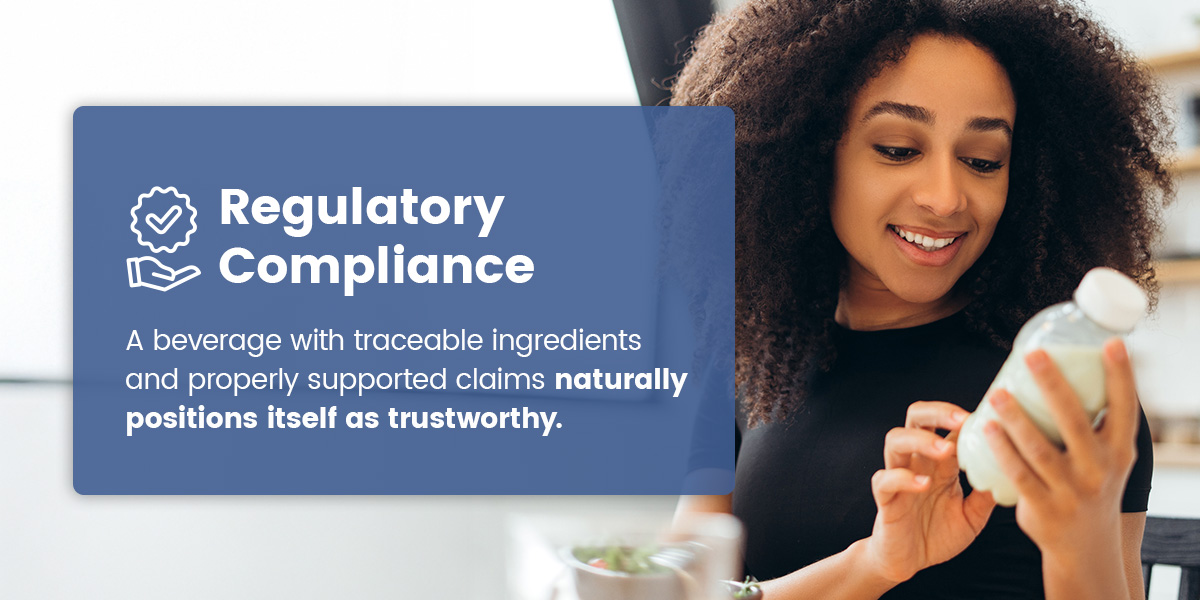
Meeting or exceeding regulatory standards can be a key differentiator. When formulation, labeling and documentation are transparent, trust builds. A beverage with traceable ingredients and properly supported claims naturally positions itself as a trustworthy choice for discerning consumers and retail buyers alike.
Supply Chain and Manufacturing
Sourcing functional ingredients, such as botanical extracts or minerals, often relies on global supply chains vulnerable to climate events, political shifts or crop yield variability. Manufacturing functional beverages may also require specialized equipment, ingredient handling, and quality assurance protocols — all of which increase costs and production times.
A strategic sourcing and manufacturing setup approach that prioritizes dual sourcing, rigorous supplier audits and process optimization can enhance product consistency and scalability. Investing in quality control and process design facilitates stable output, which prevents costly delays or recalls, builds long-term operational strength and brand reliability.
Brand Differentiation
In a market saturated with “better-for-you” claims, standout positioning requires more than trending ingredients. While many functional beverages compete on similar buzzword ingredients, taste and texture remain essential to winning repeat customers.
Effective differentiation comes from thoughtful formulation that integrates clean labeling, transparency and sensory appeal. A beverage that balances credible health benefits with an enjoyable taste and clear ingredient transparency sends a clear signal of quality to both retailers and consumers.
Consumer Education
Consumers increasingly expect clarity. With many functional drinks on the market making overlapping claims, skepticism about health claims is common. Some consumers remain unconvinced about the efficacy of the ingredients or are wary of overhyped claims. Misinformation and a lack of clarity around ingredient sourcing, risk and benefits can erode trust.
Brands that proactively invest in educational content, transparent ingredient disclosures and accessible explanations of functional benefits foster trust and informed decision-making. Third-party testing and data-backed storytelling turn communication into a long-term loyalty driver, helping consumers see what a product does and why it works.
Strategies for Commercializing Women's Health Beverages
Bringing a woman's health beverage to market requires more than bold claims and a good formula. Successful commercialization depends on collaboration with beverage development and manufacturing experts, planning for operational resilience, and building strategic relationships to support growth.
Working with an experienced beverage development partner streamlines compliance, sourcing, formulation and commercialization logistics. Specialized expertise ensures regulatory adherence, ingredient traceability and consistent quality control across production runs. Key strategies include:
- Invest in small-batch pilot production early: Begin with small-scale pilot runs before committing to full-volume manufacturing. Pilot runs validate ingredient stability, flavor, and shelf life and compliance under real-world conditions, reducing risk before full-scale rollout. They also provide finished product samples for sales presentations, investor showcases, buyer evaluations and consumer sampling initiatives — helping brands build excitement and secure early commitments before national launch.
- Diversify the supply chain: Sourcing raw materials from multiple vetted suppliers to mitigate risk from geopolitical instability, climate variability or seasonal disruptions. Securing long-term contracts and maintaining strong supplier relationships ensures quality and availability.
- Design for manufacturing scalability: Work with contract manufacturers that not only meet your process, quality and compliance requirements but also have the capacity to scale alongside your brand. The right partner should offer flexibility for pilot batches, support for specialized ingredients like probiotics or botanicals, and proven quality control systems that ensure consistent production across growth stages. Choosing scalable partners early lays the foundation for smoother expansions and faster speed-to-market.
- Invest in transparent documentation: Maintain thorough documentation of ingredient sourcing, test results, formulation specifications and labeling compliance. Build traceability systems to support audits and regulatory reviews.
- Develop compelling consumer communication: Craft clear, factual messaging that explains how the beverage supports women's wellness, including ingredient benefits, scientific rationale and sourcing transparency. Thoughtful education builds consumer trust, loyalty and advocacy.
Partner With BevSource to Accelerate Your Women's Health Beverage Success
As the women's health category grows, it's continuously shaped by consumer expectations for efficacy, transparency and product integrity. Businesses that understand regulatory requirements, invest in reliable supply chains and prioritize credible consumer education are positioning themselves to lead the next wave of functional beverage innovation.
Success ultimately comes from partnering with a reliable development, manufacturing and sourcing supplier. This partnership ensures you have the expertise and essential services to grow and scale your product in response to consumer demand.
BevSource supports beverage businesses with technical expertise, vetted supplier networks and end-to-end solutions that help you navigate this fast-moving landscape. From formulation guidance to customizable development and production, our team helps transform great ideas into scalable, shelf-ready products.
Connect with BevSource to access the resources, relationships and operational strength you need to confidently grow in the women's health market.