Beyond the Gym: How Plant Protein Beverages Are Expanding Into New Categories
Plant-based protein beverages have grown far beyond their gym-focused beginnings, moving firmly into the mainstream across categories like ready-to-drink smoothies, functional coffees and meal replacements. This expansion has been fueled by consumers’ rising focus on health, wellness and sustainable lifestyles.
Today, innovation in protein blending, next-generation plant proteins, improved textures and more sophisticated flavor systems is removing historical growth barriers and drawing in mainstream consumers. As plant-based innovation continues to reshape everyday nutrition, brands that act now have a clear opportunity to define the next generation of functional wellness beverages.
The Evolution of Plant Protein Beverages
Historically, many protein drinks were formulated to support performance, aid muscle recovery and meet the protein requirements of gym-goers. Early products relied on a limited number of plant protein sources and faced challenges with taste and texture, making them less appealing to mainstream consumers.
The evolution began as public interest in health, wellness and sustainability grew, expanding the market well beyond athletes. Major drivers of this shift include:
- The rise of flexitarian and plant-based diets
- Concerns about the environmental impact of animal agriculture
- Growing recognition of the wellness and sustainability benefits associated with plant-based proteins
Consumers are now seeking protein in convenient formats that accommodate their busy lifestyles, driving strong interest in ready-to-drink (RTD) and functional beverage formats.
Manufacturers have responded with innovations in protein extraction, blending and formulation that improve flavor, solubility and mouthfeel, helping plant-based options compete more directly with dairy-based protein drinks. Advances in ingredient technology, such as new protein isolates from peas, oats and hemp, enable brands to offer beverages that are both enjoyable and nutritious, while catering to a broader range of dietary needs.
These plant protein products also appeal to those seeking clean labels, allergen-free alternatives and greater transparency about sourcing and processing. An increased demand for sustainability has further encouraged brands to use renewable agricultural resources and to highlight the reduced carbon footprint of their drinks.

As a result, the plant-based beverages market has experienced remarkable growth, with high-protein drink launches more than doubling between 2020 and 2024, including many new plant-based options. Now, plant protein beverages are consumed for daily wellness, as meal or snack replacements, and even simply as convenient, better-for-you refreshments, illustrating how a product category once strictly for athletes has become a mainstream staple for modern consumers seeking both health and sustainability in their beverages.
New Frontiers: Categories Embracing Plant Protein
Everyday protein consumption through beverages is no longer confined to protein shakes. It's now being incorporated into a variety of beverage categories to serve evolving consumer tastes, nutritional needs and lifestyles. Below is an overview of the key beverage segments making space for plant protein innovation.
1. RTD Innovations
Convenient, on-the-go beverages continue to fuel growth in plant protein adoption, using a broad spectrum of protein sources, including pea, oat and almond, while introducing inventive flavor profiles such as matcha, cold brew and tropical fruits. Busy consumers drive this segment's expansion, seeking nutritious functionals that integrate effortlessly into active lifestyles.
2. Meal Replacements and Functional Nutrition
Many protein beverages are now sophisticated meal replacements designed to deliver balanced nutrition, improve satiety and support muscle health for a much wider audience, including wellness consumers, busy professionals, older adults and GLP-1 users.
Modern protein beverages use various protein sources, each offering specific benefits:
- Oat protein adds creaminess and beta-glucans for satiety and heart health. Sophisticated plant-based meal replacements provide balanced nutrition, prolonged satiety and muscle support.
- Pea protein, like OWYN or Herbalife V, is hypoallergenic with a balanced amino profile for gut health, satiety and muscle preservation — ideal for dairy-sensitive users.
- Soy protein isolate, such as Soylent, delivers a complete PDCAAS score of 1.0 for optimal absorption and affordability in full-meal RTDs.
In comparison, whey isolate offers rapid absorption, collagen targets skin and joint health, and calcium caseinate extends satiety — yet plant options rival these functionalities without dairy allergens or animal sourcing.
3. Coffee, Tea and Hybrid Beverages
Plant protein fortification is redefining coffee, tea and hybrid beverages. Some protein drink trends include adding protein to cold brew coffees, matcha lattes, herbal teas and even sparkling functional waters to create drinks that deliver both function and flavor. These beverages pair familiar sources of stimulation, such as coffee and matcha, with added functional nutrition from plant proteins, appealing to lifestyle consumers seeking focus, balance and everyday wellness.
4. Alcoholic and Adult Beverages
While still an emerging area, innovation is occurring primarily in adult-oriented, nonalcoholic beverage formats rather than in alcohol itself. Brands are exploring functional, alcohol-free alternatives such as mocktails and adult lifestyle beverages that incorporate plant proteins alongside botanicals, adaptogens and other wellness-forward ingredients.
In parallel, the broader adult beverage category is evolving toward better-for-you positioning, with nonalcoholic options playing a growing role in meeting consumer demand for function, moderation and balance.
5. Plant-Based “Dairy” and Specialty Drinks
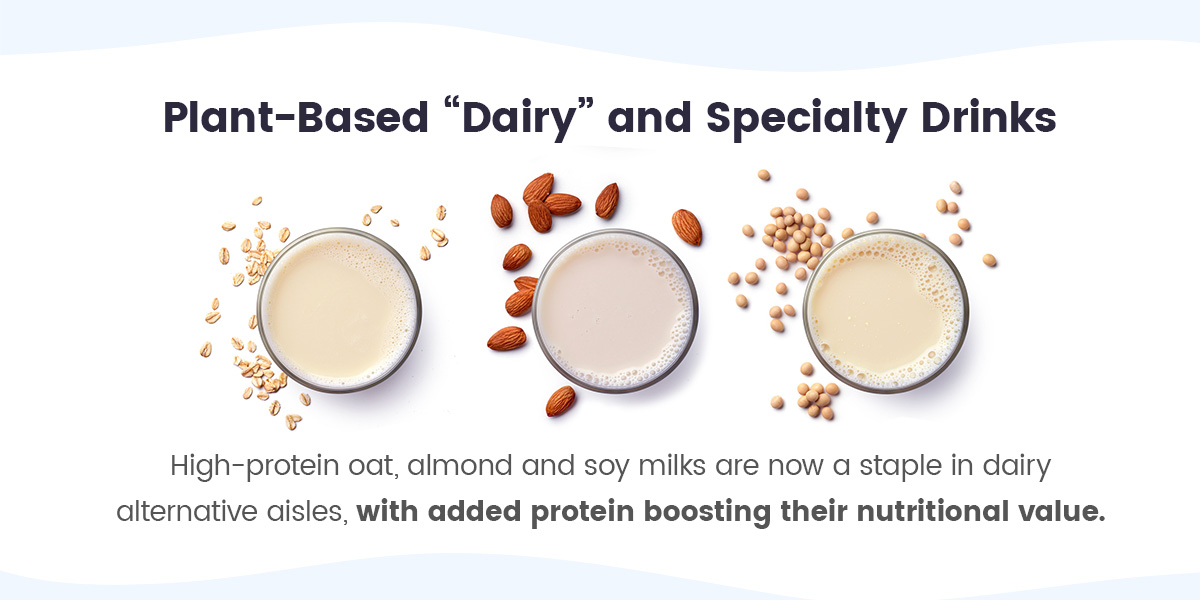
High-protein oat, almond and soy milks have become staples in dairy alternative aisles, with added protein boosting their nutritional value well beyond classic plant milks. Supported by ongoing innovation in flavor, fortification and processing techniques, these plant-based “dairy” beverages are gaining popularity among vegans, flexitarians and health-conscious shoppers. These plant-based dairy alternatives are also valued for their digestibility and potential benefits for nutrient absorption.
What's Fueling Consumer Demand?
The demand for plant protein beverages is booming, driven by several converging consumer trends:
Health and Wellness Priorities
Consumers increasingly use plant protein beverages to support their health and wellness goals, including:
- Improving daily nutrition
- Aiding weight management
- Promoting muscle health
- Enhancing energy levels
Functional beverage choices are now seen as a pathway to holistic well-being, appealing to everyone from busy parents to older adults. Plant-based proteins from peas, oats, soy and almonds are prized for their amino acid content, digestibility and nutrient density. Many products go further by adding vitamins, minerals, fiber or probiotics to expand functional benefits.
Clean Label and Ingredient Transparency
“Clean label” is more than a buzzword — it's now a baseline requirement. Consumers demand ingredient lists they can recognize and trust, often seeking “free-from” claims and wanting greater visibility into sourcing and processing. Plant protein beverages frequently align with these preferences through simpler formulations and minimal processing. Brands that succeed in this space have the opportunity to highlight their straightforward, honest approach to formulation.
Sustainability and Ethical Sourcing
Many consumers, particularly younger generations, take environmental considerations into account when making purchasing decisions. Plant-based proteins are appealing because they typically require fewer resources and generate a lower environmental footprint than animal-derived alternatives.
Ethical sourcing practices, such as regenerative agriculture, fair labor and transparent supply chains, are also emerging as points of differentiation and trust-building. Beverage brands are responding by emphasizing the sustainability of their plant-based protein drinks, both in their sourcing practices and packaging innovations.
Mainstream Accessibility
Plant protein beverages are now widely available in mainstream supermarket aisles, coffee chains, gyms, convenience stores and online retailers. This expanded access, combined with a proliferation of flavors, formats and functional options, has made plant protein drinks a regular part of many consumers' routines. Greater availability and cross-category innovation are integrating plant protein beverages into everyday consumption occasions.
How to Overcome Formulation and Manufacturing Challenges
Successfully formulating and manufacturing plant protein beverages requires addressing both sensory and technical complexities. Overcoming these challenges is crucial to delivering products that meet consumer expectations while adhering to quality, safety and regulatory standards. Below are key hurdles brands and manufacturers must manage.
Flavor Masking and Texture Solutions
Plant proteins often carry bitterness, beany or earthy notes, as well as gritty or chalky textures that can limit consumer acceptance. Beverage developers use a range of strategies to address these issues, including:
- Flavor masking: Natural flavors, sweeteners and botanical extracts mask off-notes typical of pea, soy and other plant proteins. Chocolate, vanilla and tropical fruit are popular.
- Texture solutions: Modern stabilizers, hydrocolloids and innovative protein blends help create a smooth, creamy mouthfeel while emulsifiers prevent sedimentation and separation.
- Iterative testing: Brands are increasingly relying on rapid prototyping and consumer testing to fine-tune taste and mouthfeel early in the development process, reducing reformulation risk and accelerating time to market.
Shelf Stability
Plant protein drinks must remain safe, stable and appealing throughout their shelf life for convenience and distribution reasons. pH balancing, stabilizer selection and careful choice of plant protein sources improve solubility and reduce sedimentation, ensuring consistent quality from production to purchase.
Regulatory Compliance
In the U.S., the FDA provides guidance governing labeling ingredient statements and allowable claims for plant-based beverages. Brands must use accurate nomenclature and ensure that protein content, nutrient fortification, allergen disclosures, and any structure or function claims are properly substantiated. The Nutrition Facts Panels must reflect validated analytical data, protein content, ingredient lists and fortification levels, confirmed through accelerated shelf-life testing to ensure label accuracy throughout the product’s shelf life.
As plant-based categories continue to evolve, regulatory expectations may shift. Ongoing collaboration with regulatory experts, testing partners and food safety consultants helps brands remain compliant and adapt efficiently to changes.
How Beverage Brands Can Capitalize on the Trend
Beverage brands getting into mainstream protein beverages can position themselves for success with these three strategies:
1. Produce With the Right Partners
Selecting co-packers and supply chain partners who can grow in tandem with your business is crucial. The right partners provide the infrastructure, expertise and technology to efficiently scale production as demand increases. They also ensure consistent quality, regulatory compliance and reliable access to high-quality plant protein ingredients and packaging materials, helping your brand meet market expectations without disruption.
2. Do Small-Batch Runs for Market Testing
Conducting small-scale pilot runs before committing to full-scale production can provide critical insights or can de-risk full production by testing real-world performance:
- Dialing in recipes, refining processes and adjusting product parameters, limiting the liability of having large volumes of product manufactured that don't meet your requirements.
- Anticipate challenges that may occur during manufacturing scale-up.
3. Use Industry Expertise and Networks
Collaborating with experienced development firms, consultants, or established beverage service providers brings deep market knowledge and perspective to your brand. They can accelerate your speed to market, help you avoid costly mistakes and position your product for long-term profitability and visibility.
The Future of Plant Protein Beverages
Plant protein beverages will continue to move far beyond traditional RTDs and post-workout shakes, expanding into:
- Functional hybrids: Expect more innovative blends, such as plant protein-infused sparkling waters, energy drinks, teas, coffees and juices designed for holistic wellness and convenient nutrition.
- Meal replacements with targeted benefits: Products tailored for different consumer segments, like older adults, women, kids and GLP-1 users, will proliferate. Customized protein profiles, added fiber, probiotics and adaptogens will address a wider array of health and lifestyle needs.
- Plant-based dairy alternatives: High-protein oat, almond and soy milks will increasingly serve as everyday dairy substitutes and stand-alone protein beverages.
Watch for the rise of new plant proteins, such as chickpea, lentil and fermentation-derived proteins, for their amino acid balance, allergen-free qualities and environmental benefits. The push for fewer ingredients, clear origin stories and eco-friendly packaging will also intensify as consumers demand transparency and ethical choices.
Expand Your Beverage Brand With BevSource
Expanding your beverage brand into the plant protein beverage market is a strategic move. Partnering with BevSource can set you up for long-term success.
We're your growth accelerator with deep industry networks and real-world insights to help you seize emerging opportunities and navigate new beverage categories. We'll connect you with the right partners to support anything from small-batch pilot runs to national rollouts.
Contact us for a consultation or explore our partnership opportunities.